

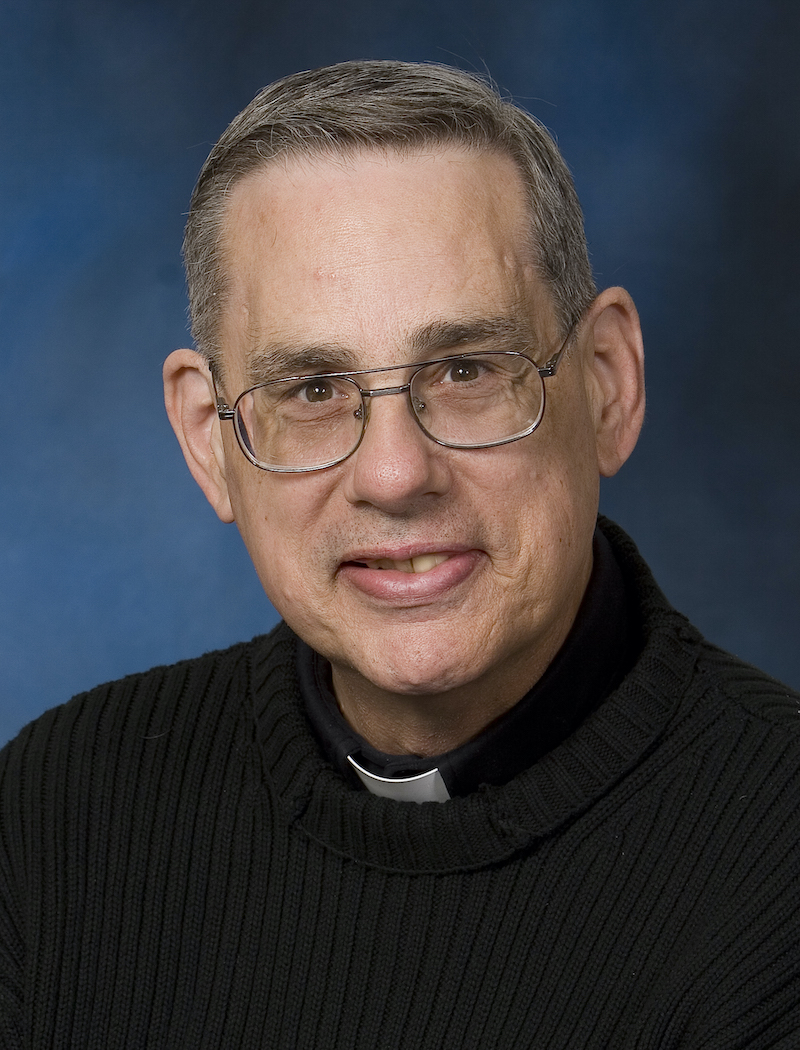
The extraordinary testimony of Father Steven Scheier, the terrifying reality of particular judgment, and the mercy of God that calls every soul to conversion before it is too late.
He was a Catholic priest. He celebrated Holy Mass. He heard confessions. He preached the Gospel. To those who knew him, he appeared to be a man of God. But according to his own extraordinary testimony, when he stood before Jesus Christ, none of those appearances could conceal the true condition of his soul.
There were no crowds to impress.
No parishioners to praise him.
No reputation to protect.
No excuses left to offer.
Only the soul of a priest standing before the One who knew him completely.
And in the experience he later described, the judgment was terrifying.
Hell.
Yet this story did not end with condemnation.
According to Father Steven Scheier, a woman’s voice entered the encounter and pleaded for his life and his immortal soul.
He understood that voice to be the Blessed Virgin Mary.
What followed became the defining spiritual event of his priesthood.
But the deepest lesson is not that one priest claimed to receive an extraordinary second chance.
It is that every one of us is living within a period of mercy that will not last forever.
The most frightening possibility is not that God will discover something about us that He did not already know. It is that we will finally be forced to acknowledge the truth about ourselves that we have spent a lifetime refusing to face.
I. A Priest Who Had Learned to Appear Holy
Father Steven Paul Scheier was ordained to the Catholic priesthood on May 26, 1973, for the Diocese of Wichita, Kansas.
He entered a vocation of extraordinary dignity.
Through the Sacrament of Holy Orders, a priest receives a sacred ministry ordered toward the service of Christ and His Church.
He stands at the altar to offer the Eucharistic Sacrifice.
He administers the Sacrament of Penance.
He preaches the Word of God.
He is called to become an instrument through whom Christ continues His saving work.
But the dignity of the priesthood does not automatically guarantee the holiness of the man who receives it.
The sacramental character of Holy Orders is real, yet the priest remains a human being capable of sin, spiritual negligence, pride, and personal failure.
Father Scheier would later acknowledge that the first twelve years of his priesthood had been deeply compromised by his own spiritual condition.
He was concerned about how others perceived him.
He sought approval.
He wanted to be regarded as a good priest.
He admitted that his prayer life was severely neglected and that he had failed to make Christ the true center of his ministry.
This is a spiritually disturbing admission.
Because a person can become remarkably skilled at performing the outward duties of religion while neglecting the inward demands of discipleship.
One can know the correct prayers without learning to pray from the heart.
One can speak eloquently about humility while secretly seeking admiration.
One can preach repentance while resisting conversion.
One can understand Catholic doctrine intellectually while failing to allow that doctrine to transform one’s life.
None of this makes the sacraments themselves false or powerless.
The Church teaches that Christ acts through the sacraments, even when the minister is personally unworthy, provided the necessary conditions for their valid celebration are present (Catechism of the Catholic Church, §1128).
But the priest who administers grace to others must also cooperate with that grace in his own soul.
This is the tragedy at the heart of Father Scheier’s testimony.
He was helping others approach God while, by his own account, allowing his personal relationship with God to deteriorate.
Jesus warns us in Matthew 7:21:
“Not every one that saith to me, Lord, Lord, shall enter into the kingdom of heaven.”
The warning is not directed only toward those who openly reject religion.
It confronts everyone who mistakes external religious activity for authentic surrender to the will of God.
A clerical collar does not replace conversion.
An ecclesiastical title does not eliminate accountability.
And the applause of human beings cannot substitute for the judgment of Jesus Christ.
II. October 18, 1985: The Day Everything Changed
On October 18, 1985, Father Scheier was traveling from Wichita toward his parish at Sacred Heart in Fredonia, Kansas.
He was driving along a dangerous stretch of highway when his vehicle collided head-on with another vehicle.
The injuries were devastating.
He suffered a serious head injury and a fracture of the second cervical vertebra in his neck.
He was thrown from his vehicle.
According to his written account, a nurse traveling nearby stopped and helped ensure that his injured neck was not moved improperly.
He was taken for emergency treatment and later transported to a hospital in Wichita.
Father Scheier recalled being told that his chances of survival were approximately fifteen percent.
He survived.
His recovery required hospitalization, extensive medical care, and months of immobilization and rehabilitation.
Meanwhile, Catholics and other Christians in the surrounding community were praying for him.
His parishioners prayed the Rosary.
Other Christian congregations also prayed for his recovery.
By May 1986, he had returned to his parish ministry.
From the outside, this was already a remarkable story of survival.
But according to Father Scheier, the greatest transformation had not yet been fully revealed to him.
Something had happened during the period surrounding his accident.
Something he would only later remember.
And the occasion for that remembrance would be a passage from Sacred Scripture about a tree that had failed to bear fruit.
III. The Fig Tree That Deserved to Be Cut Down
One morning, while celebrating Holy Mass, Father Scheier encountered the parable of the barren fig tree in Luke 13:6–9.
In the parable, a man has planted a fig tree in his vineyard.
For three years, he has come seeking fruit and found none.
He tells the gardener to cut it down.
Why should it continue occupying the ground without producing anything?
But the gardener pleads for another opportunity.
Luke 13:8 records his response:
“Lord, let it alone this year also, until I dig about it, and dung it.”
The gardener asks for time.
Time to cultivate the soil.
Time to nourish the roots.
Time to see whether the tree will finally bear fruit.
The parable is a warning about judgment, but it is also a revelation of divine patience.
The tree has been given an opportunity to fulfill its purpose.
It has received a place to grow.
It has drawn nourishment from the earth.
Yet it has produced no fruit.
Its continued existence cannot be treated as proof that fruitfulness does not matter.
The gardener’s request is merciful, but it is not an endorsement of permanent barrenness.
The additional time is given for a reason.
Conversion.
Father Scheier reported that while reading this Gospel, the words seemed to become illuminated and enlarged before him.
Later, in the rectory, he remembered what he believed had happened after the accident.
He understood himself to have stood before Jesus Christ in judgment.
The barren fig tree was no longer simply a biblical image.
It had become, for him, a reflection of his own life.
Twelve years of priesthood.
Twelve years of sacramental grace.
Twelve years of opportunities to become holy.
And yet he believed that he had failed to produce the fruit God had entrusted him to bear.
The connection is deeply sobering.
The tragedy of the barren fig tree was not that it had never been given an opportunity to grow. It was that it had received so much and returned so little.
That is a warning for every baptized Christian.
How much grace have we received?
How many times has God called us to repentance?
How often have we promised to change?
And how often have we postponed that change until some imagined tomorrow?
IV. Standing Before the Truth, There Were No Excuses
Father Scheier described what he understood to be an encounter with Jesus Christ as Judge.
He said that Christ brought before him the sins and failures of his life, including wrongs that remained unrepented.
He had imagined that when confronted with his failures, he would have explanations.
Other people had been difficult.
Circumstances had been demanding.
His responsibilities had been burdensome.
Perhaps his faults were understandable.
But before the judgment of Christ, the excuses disappeared.
All that remained was the truth.
In his recollection, his response to the accusations was simply an acknowledgment of their justice.
This aspect of the testimony may be more spiritually significant than the extraordinary experience itself.
Because human beings are remarkably capable of justifying themselves.
We compare our sins with the sins of others.
We reduce our failures to unfortunate circumstances.
We persuade ourselves that intentions excuse actions.
We hide behind our achievements, our suffering, our responsibilities, and sometimes even our religious devotion.
But God sees beyond appearances.
He knows not only what we have done, but why we have done it.
He knows the charity behind a sacrifice and the vanity behind an apparently generous act.
He knows when we have struggled sincerely against temptation.
He also knows when we have secretly made peace with sin.
The Letter to the Hebrews teaches that nothing in creation is concealed from God’s sight (Hebrews 4:13).
This is the reality of particular judgment.
The Catechism of the Catholic Church, paragraph 1022, teaches that every person receives judgment in relation to Christ at death.
Our earthly life has eternal significance.
We do not carry our reputation into judgment as evidence that overrides the truth of our souls.
We carry the reality of our relationship with God.
And there, the difference between appearing holy and becoming holy matters infinitely.
V. The Sentence He Said He Heard
The most frightening part of Father Scheier’s testimony was his account of hearing that his sentence was hell.
He later explained that he did not experience the judgment as arbitrary or unjust.
He understood it as the consequence of the spiritual choices he had made.
That deserves careful reflection.
The Church does teach that hell is real.
It also teaches that God does not predestine anyone to damnation.
Paragraphs 1033–1037 of the Catechism explain that hell is the definitive separation from God of those who die in mortal sin without repentance.
God wills the salvation of sinners and calls them to conversion.
But He does not force a person to love Him.
Our freedom carries eternal consequences.
We must, however, distinguish Catholic doctrine from the particular details of Father Scheier’s reported experience.
The Church does not teach that a soul can receive an irrevocable sentence of damnation after death and subsequently leave hell.
Father Scheier survived his accident. Therefore, his experience must not be interpreted as proof that the definitive particular judgment can be reversed.
His account may be received as a personal warning or spiritual testimony, but it cannot establish a new doctrine concerning what happens after death.
The Church’s revealed teaching remains our foundation.
And that teaching is already sufficiently serious.
We have been given an earthly life in which to respond to grace.
We must not presume that opportunities for repentance will continue indefinitely.
Jesus Himself warns us in Luke 13:3:
“No, I say to you: but unless you shall do penance, you shall all likewise perish.”
This warning is not intended to make us despair.
It is intended to wake us from spiritual indifference.
The terrible danger is believing that because God has been patient with us yesterday, we can safely postpone conversion tomorrow.
VI. The Mother Who Pleaded for Her Son’s Mercy
Then comes the most moving element of Father Scheier’s account.
After the terrifying judgment he believed he had experienced, he recalled hearing a woman’s voice pleading on his behalf.
He understood the speaker to be the Blessed Virgin Mary.
She asked her Son to spare his life and grant him another opportunity.
In Father Scheier’s retelling, the appeal centered upon the possibility of receiving special graces and finally producing the spiritual fruit that had been lacking.
He recalled Christ entrusting him to His Mother.
For Father Scheier, this moment transformed his understanding of Marian devotion.
Mary was no longer simply a figure about whom he knew Catholic doctrines.
He came to regard her maternal intercession as a deeply personal reality.
Here we must approach the mystery with both devotion and theological precision.
Catholics do not believe that Mary is more merciful than Jesus.
We do not believe that Christ is unwilling to save sinners until His Mother persuades Him otherwise.
We do not believe that Mary exercises an independent authority capable of overturning the divine will.
Such interpretations would misunderstand the Catholic faith.
Jesus Christ is the one Redeemer and Mediator between God and humanity (1 Timothy 2:5).
The Blessed Virgin’s intercession depends entirely upon His saving work.
As the Catechism teaches in paragraphs 969–970, Mary’s maternal role does not diminish Christ’s unique mediation.
Rather, it participates in and manifests its power.
Her intercession is possible because of His grace.
Her love is rooted in His love.
Her desire for our salvation is never opposed to His divine will.
The scene Father Scheier described should therefore not be understood as a conflict between a severe Son and a compassionate Mother.
The authentic Catholic understanding is far more beautiful.
Mary’s intercession reveals the mercy of Christ, not a mercy that must overcome Christ.
Consider the Wedding Feast at Cana.
When the wine was exhausted, Mary brought the need before Jesus.
Then she instructed the servants:
“Whatsoever he shall say to you, do ye.” — John 2:5
These words express the heart of authentic Marian devotion.
Mary never draws the faithful away from obedience to Jesus.
She leads them toward it.
Her maternal concern is not permission to continue in sin.
It is a call to listen to her Son and do what He commands.
If Father Scheier’s testimony leads us to a deeper devotion to Mary, that devotion must also lead us to repentance, the sacraments, and greater fidelity to Christ.
Otherwise, we have misunderstood the very Mother whose help we seek.
VII. The Terrifying Danger of Confession Without Conversion
Perhaps the most practical warning in this entire story concerns the Sacrament of Penance.
It is possible for Catholics to become accustomed to confession as an outward routine while failing to confront seriously the need to change.
We confess the same sins.
We say the familiar prayers.
We receive absolution.
Then we return to the same habits without making any meaningful effort to resist them.
But there is a crucial distinction between repeated weakness and a refusal to repent.
A person may sincerely hate a sin, genuinely intend to avoid it, take concrete steps against it, and nevertheless fall again through weakness.
That person should never conclude that repeated failures automatically make confession insincere.
The sacrament is a source of healing precisely because sinners need God’s grace.
However, there is another situation.
A person may confess a sin while deliberately intending to continue committing it.
He may have no desire to resist the temptation.
He may intend to preserve the circumstances that lead to the sin because he does not truly want to abandon it.
This is spiritually different from sincere repentance accompanied by human weakness.
The Catechism, paragraph 1451, defines contrition as sorrow for sin joined to the resolution not to sin again.
A firm purpose of amendment is not a prediction that we will never fail.
It is an honest decision of the will, supported by grace, to turn away from sin.
A person who intends to fight and later falls again is not in the same moral position as someone who has already decided not to fight.
This distinction protects us from two opposite dangers.
The first is presumption: expecting forgiveness while deliberately refusing conversion.
The second is despair: believing that God will no longer forgive us because we have fallen repeatedly despite sincerely trying to change.
Both are distortions of Christian hope.
Pope Saint John Paul II, in Reconciliatio et Paenitentia, paragraph 31, teaches that contrition involves a decisive rejection of sin and a genuine resolution not to commit it again.
Yet the grace of reconciliation is offered precisely to wounded human beings.
God does not demand that we arrive at confession already perfect.
He asks us to come truthfully, humbly, and repentantly.
The confessional is not a place where perfect people go to preserve their innocence. It is where sinners go to receive the mercy and strength necessary to become holy.
But we must enter it honestly.
We cannot ask God to heal a wound while deliberately refusing to surrender the instrument with which we continue reopening it.
VIII. What If the Sin We Keep Confessing Is the One We Secretly Love?
This is perhaps the most uncomfortable question raised by the story.
What if our greatest obstacle to holiness is not that we do not recognize our sins?
What if we recognize them perfectly well but do not truly want to surrender them?
Perhaps it is resentment.
We know Christ commands forgiveness, but we repeatedly nourish bitterness against someone who has wounded us.
Perhaps it is pride.
We know humility is necessary, yet we cannot bear to be corrected.
Perhaps it is impurity.
We recognize the moral disorder of a habit but continue arranging our lives around opportunities to indulge it.
Perhaps it is dishonesty.
We confess lying while carefully preserving the advantages our dishonesty provides.
Perhaps it is neglect of God.
We claim that prayer is important while giving nearly every other activity priority over it.
Or perhaps, like Father Scheier described of his earlier priesthood, it is the desire to appear righteous in the eyes of others while neglecting the hidden life of the soul.
Whatever the sin, the question remains:
Do I truly want God to free me from it?
Or do I merely want relief from the guilt it produces?
True repentance requires more than regret over consequences.
It requires a change in our relationship with the sin itself.
We begin to see it not as a treasured pleasure that God unfairly forbids, but as something that wounds our communion with Him.
That transformation may be gradual.
It may involve repeated confession, spiritual direction, sacrifices, setbacks, and years of perseverance.
But conversion begins when we stop defending the sin and begin sincerely resisting it.
The difference is not necessarily visible to the world.
But it is known to God.
IX. Why Priests Must Also Fear the Judgment of God
Father Scheier’s story contains a particularly serious warning for the ordained.
A priest is entrusted with sacred responsibilities.
He is called to preach the truth, administer the sacraments faithfully, care for souls, and live according to the Gospel he proclaims.
His vocation gives him extraordinary opportunities for holiness.
It also places upon him grave responsibilities.
Jesus teaches in Luke 12:48 that much will be required from those to whom much has been entrusted.
Saint James likewise warns that teachers will be judged with greater strictness (James 3:1).
These passages should not encourage hostility toward priests.
They should encourage prayer for them.
A priest may spend his life hearing about the suffering, temptations, sins, and needs of others while quietly struggling with his own soul.
He may experience loneliness, exhaustion, discouragement, or spiritual dryness.
He may become overly attached to the approval of parishioners.
He may mistake success in ministry for personal holiness.
He may become so busy working for God that he neglects intimate friendship with God.
For these reasons, the faithful have a serious responsibility to pray for their priests.
We should pray that they remain faithful to their promises.
That they celebrate the Mass reverently.
That they preach the truth courageously.
That they themselves seek confession, spiritual direction, and continual conversion.
And that they never confuse the authority entrusted to them with personal exemption from the demands of holiness.
We should also recognize that a priest’s wrongdoing must not be excused merely because he is ordained. Where serious harm or abuse has occurred, justice, protection of victims, accountability, and appropriate civil and ecclesiastical action remain essential.
Prayer and accountability are not enemies.
The Church needs holy priests.
And priests need the prayers, encouragement, and appropriate support of the Church.
Father Scheier’s willingness to acknowledge his earlier failures can therefore be understood as a warning against spiritual complacency, not as an invitation to despise the priesthood.
X. Divine Mercy Is Not Permission to Postpone Repentance
There is a dangerous misunderstanding of God’s mercy.
It imagines mercy as a guarantee that repentance can always be postponed until a more convenient moment.
We tell ourselves:
There will be time when life becomes less complicated.
There will be time when the children are grown.
There will be time when the temptation becomes easier to resist.
There will be time when retirement comes.
There will be time when we are older.
There will be time when death seems closer.
But none of us has been promised tomorrow.
Every day is a gift.
Every opportunity to repent is a grace.
And every deliberate postponement of conversion risks making the heart less responsive to God’s invitation.
The Catechism, paragraph 2092, explicitly warns against presuming upon God’s mercy while refusing conversion.
That is not Christian hope.
It is the misuse of mercy as an excuse for disobedience.
The spiritual lesson of Father Scheier’s accident is therefore not that we should expect a dramatic experience before death.
It is that we should respond to the ordinary graces God is already offering.
We have Sacred Scripture.
We have the teachings of the Church.
We have the Holy Mass.
We have the Sacrament of Reconciliation.
We have opportunities for prayer, charity, penance, and the practice of virtue.
We have the intercession of the Blessed Virgin Mary and the saints.
We do not need to suffer a catastrophic accident before taking our souls seriously.
The extraordinary mercy in Father Scheier’s testimony should awaken us to the ordinary mercy we receive every day and so often take for granted.
XI. The Most Important Word Is Not Hell. It Is Today.
There is a reason that the Church continually calls the faithful to conversion.
Because the time in which we can respond to grace is now.
Not yesterday.
Not an imagined tomorrow.
Now.
The Christian life is not a theatrical performance staged before the judgment of others.
It is a real relationship with the living God.
And that relationship requires honesty.
We cannot hide our hearts behind religious language.
We cannot substitute public admiration for personal holiness.
We cannot treat confession as a ritual that excuses a settled refusal to change.
We cannot depend upon an extraordinary second chance when God is offering us the grace of conversion today.
The appropriate response to Father Scheier’s account is therefore not fascination alone.
It is examination of conscience.
When did I last make a sincere confession?
Am I withholding a serious sin through deliberate concealment?
Am I avoiding confession out of shame or spiritual laziness?
Have I made a real effort to avoid the circumstances that repeatedly lead me into sin?
Am I cultivating prayer?
Am I fulfilling the responsibilities God has entrusted to me?
Am I growing in love of God and neighbor?
And perhaps most importantly:
If I were to stand before Jesus Christ tonight, what part of my life would I be most afraid to place before Him?
That question should not drive us away from Christ.
It should drive us toward His mercy.
The Jesus who warns us about judgment is the same Jesus who shed His Blood for our salvation.
He is the Good Shepherd who seeks the lost sheep.
He is the Savior who welcomes the repentant sinner.
He is the Son of God who instituted the Sacrament of Penance so that sinners might be reconciled to Him.
The Christian response to the reality of hell is not despair.
It is repentance, faith, charity, and confident reliance upon God’s grace.
XII. A Life Finally Offered to God
Father Steven Scheier continued serving the Church after his accident.
He spoke publicly about his experience, including in interviews with Mother Angelica on EWTN.
He understood the event as a call to become a more faithful priest and to help others recognize the reality of judgment and divine mercy.
He died on April 16, 2020, at the age of seventy-two.
At his funeral, Bishop Carl A. Kemme of Wichita recalled that in the later years of his life, Father Scheier offered his suffering and prayers for God’s glory and the salvation of souls.
His final destiny, like that of every deceased person whom the Church has not declared a saint, belongs to God’s judgment.
We commend him to divine mercy.
And his story leaves us with a final reflection.
The most remarkable part of his testimony may not be the accident.
It may not even be the terrifying encounter he believed he experienced.
It may be what happened afterward.
A priest who admitted that he had lived too much for himself began trying to live more completely for God.
He did not present himself as someone who had become instantly perfect.
He spoke as a man who had been confronted with his failures and understood that the remaining years of his life were a gift.
That is the kind of conversion to which every Christian is called.
Not necessarily through an extraordinary supernatural experience.
But through the steady surrender of the heart to Jesus Christ.
XIII. The Barren Fig Tree Is Still Standing
Let us return once more to the Gospel.
A fig tree stands in the vineyard.
It has not produced the fruit expected of it.
Its owner has reason to remove it.
Yet the gardener asks for additional time.
He promises to cultivate the soil.
He will nourish the roots.
He will work for the tree’s fruitfulness.
But the additional time has a purpose.
The tree is meant to bear fruit.
That is the image at the center of Father Scheier’s testimony.
It is also an image of every soul that continues to receive God’s patience.
Perhaps our lives have not borne the fruit they should have.
Perhaps we have wasted years in sin, resentment, pride, or spiritual indifference.
Perhaps we have become comfortable with outward religious observance while neglecting genuine conversion.
Yet if we are alive today, we still have an opportunity to respond to grace.
The door of repentance has not closed.
The confessional remains open.
God still calls us.
The Blessed Virgin Mary still intercedes for the faithful.
And Christ still offers the mercy won for us through His Passion, Death, and Resurrection.
We must never presume upon that mercy.
But neither must we despair of receiving it.
The Church invites us to trust the Lord enough to surrender the sins we have been protecting.
To admit the truth without excuses.
To seek forgiveness without delay.
To embrace the Cross rather than flee from it.
And to allow the grace of God to make us fruitful.
The barren fig tree does not need a better explanation for its barrenness. It needs to begin bearing fruit.
So do we.
Conclusion: Let Today Be the Day You Return to God
Father Steven Scheier’s story is not an invitation to become obsessed with extraordinary visions or near-death experiences.
It is an invitation to remember the ordinary truths of the Catholic faith.
Death is real.
Judgment is real.
Heaven is real.
Hell is real.
Sin has consequences.
Repentance is necessary.
God’s mercy is greater than our sins, but that mercy calls us to conversion rather than complacency.
And the Blessed Virgin Mary’s maternal intercession always directs us toward her Son.
We cannot know the hour of our death.
We cannot know how many opportunities remain before us.
But we know that God has given us this present moment.
And that is enough to begin.
If you have been away from confession, return.
If you are trapped in habitual sin, seek God’s grace and the help needed to begin overcoming it.
If you have been living for the admiration of others, return to the quiet pursuit of holiness.
If you have neglected prayer, begin again.
If you fear that your sins are too great, remember that Christ died to reconcile sinners to the Father.
Do not confuse genuine contrition with hopelessness.
And do not confuse God’s patience with permission to remain unchanged.
The priest in this story believed he had reached the end of his opportunities. You are reading these words while an opportunity is still before you.
Use it.
Not because God has ceased to love you.
But because He loves you enough to call you out of sin and into eternal life.
We spend so much of our lives preparing for things that may never happen.
We prepare for careers, holidays, weddings, financial security, and retirement.
We prepare our homes for visitors.
We prepare for meetings with people whose opinions matter to us.
Yet how much time do we spend preparing our souls to meet the One whose judgment matters eternally?
One day, each of us will stand before Christ.
There will be no reputation to protect.
No worldly achievement sufficient to purchase salvation.
No audience whose applause can change the truth.
Only the soul and its Redeemer.
Let us therefore seek Him today, while repentance remains possible and grace is being offered.
Do not wait for a car accident to teach you what the Gospel has already revealed.
Do not wait for death to make you serious about eternity.
Do not wait until tomorrow to become the person God is calling you to become today.
For the most important question is not whether Father Scheier received a second chance.
It is whether we will make faithful use of the chance God has already given us.
A Prayer for True Conversion
O Lord Jesus Christ,
You know my heart better than I know myself.
You see the sins I have confessed, the sins I have concealed, the weaknesses I struggle against, and the excuses I continue to make.
Do not allow me to mistake outward religion for inward holiness.
Give me the grace to see my soul truthfully, to repent sincerely, and to make a firm purpose of amendment.
Help me to approach the Sacrament of Reconciliation with humility, honesty, and confidence in Your mercy.
Blessed Virgin Mary, Mother of Mercy and Refuge of Sinners, intercede for me before your Divine Son.
Obtain for me the grace of perseverance, the courage to abandon sin, and a heart that seeks Jesus above all things.
May I never presume upon God’s patience or despair of His forgiveness.
Teach me to use the time I have been given for love, repentance, and holiness.
And when my earthly life comes to its end, may I be found united to Jesus Christ, trusting not in my own merits but in His saving grace.
Amen.
Historical and Doctrinal References
Historical testimony
- Father Steven Scheier, God’s Merciful Judgement: A Priest’s True Story, his first-person written testimony concerning the accident of October 18, 1985, and his reported spiritual experience.
- Father Steven Scheier, interviews with Mother Angelica, Mother Angelica Live, EWTN, 1990s.
- Joseph Pronechen, Wake-Up Call Changes Priest, National Catholic Register, August 19, 2011.
- Diocese of Wichita, Father Scheier Passes Away April 16, April 20, 2020, including Bishop Carl A. Kemme’s funeral reflections.
Sacred Scripture — Douay–Rheims Bible
- Luke 13:1–9 — Repentance and the parable of the barren fig tree.
- Matthew 7:21–23 — The danger of outward profession without obedience.
- Luke 12:48 — The responsibility attached to receiving much.
- Hebrews 4:12–13 — Nothing is hidden from God’s judgment.
- James 3:1 — The greater accountability of teachers.
- John 2:1–11 — Mary’s intercession at Cana.
- John 19:25–27 — Mary and the beloved disciple beneath the Cross.
- John 20:21–23 — The apostolic ministry of forgiving sins.
- 1 Timothy 2:5 — Christ as the one Mediator.
Catechism of the Catholic Church
- §§969–970 — The maternal intercession of the Blessed Virgin Mary.
- §1128 — The efficacy of the sacraments through Christ’s action.
- §§1021–1022 — Death and particular judgment.
- §§1033–1037 — Hell, human freedom, and the call to conversion.
- §§1450–1460 — Contrition, confession, satisfaction, and amendment of life.
- §§2090–2092 — Christian hope, despair, and presumption.
Magisterial teaching
- Pope Saint John Paul II, Reconciliatio et Paenitentia, December 2, 1984, especially §31.
- Second Vatican Council, Lumen Gentium, §§60–62, on Mary’s maternal role in the economy of salvation.
Editorial note: Father Scheier’s account is presented as his personal testimony, not as an authenticated supernatural revelation or a doctrinal statement issued by the Church. Its spiritual themes are evaluated in the light of Scripture and established Catholic teaching.