

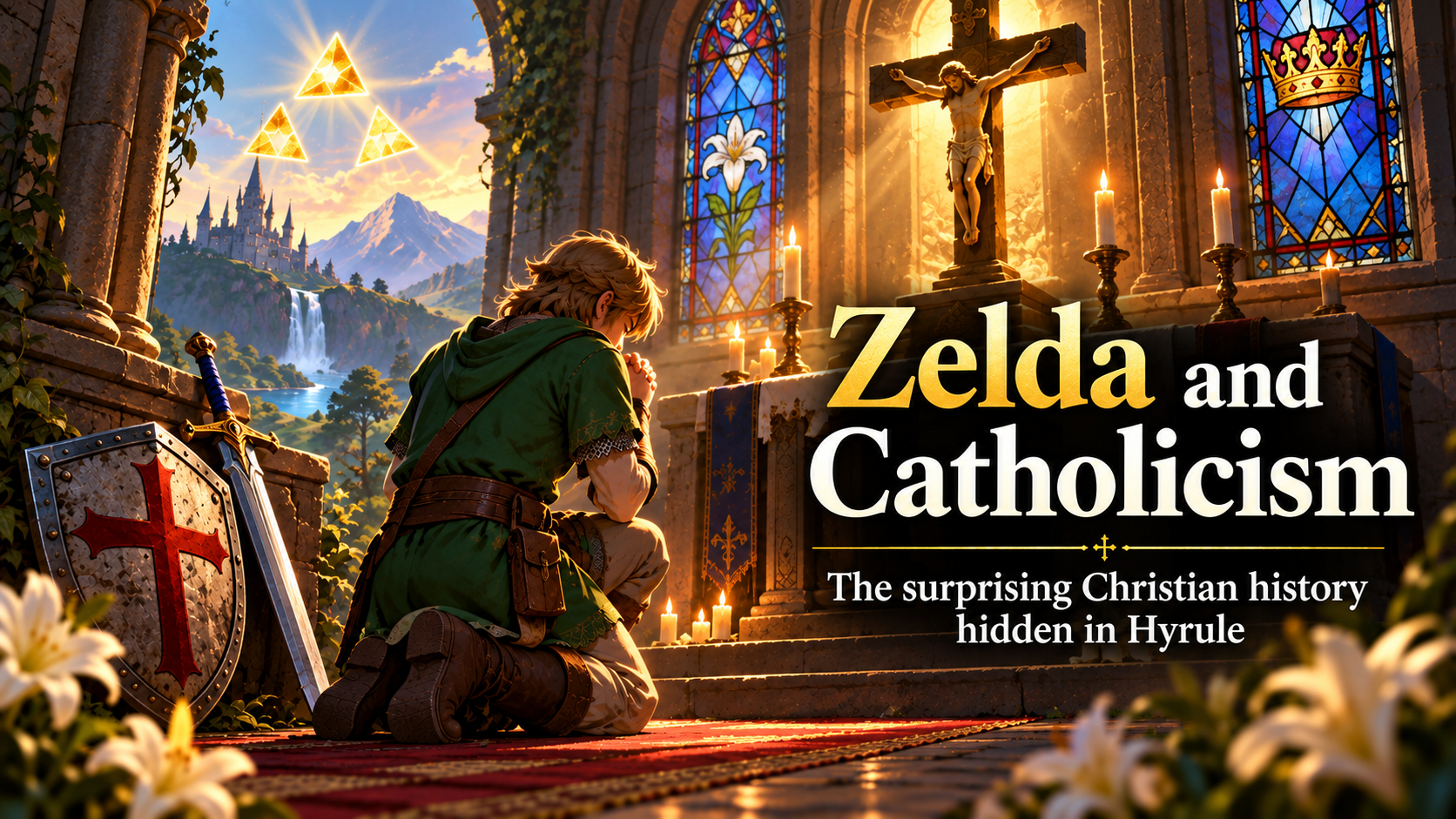
From Link praying before a crucifix to the Christian virtues reflected in the Triforce, Nintendo’s legendary adventure series has some fascinating connections to Catholic faith and theology.
CATHOLIC G33K | Faith × Gaming × Culture
A Cross, a Bible, and a Hero Named Link
What if we told you that one of Nintendo’s most beloved video game heroes once appeared kneeling in prayer before Jesus Christ crucified?
Or that the original The Legend of Zelda featured a shield bearing a Christian cross and an item literally called the Bible?
For longtime Zelda fans, these details might sound like something from an obscure fan theory. But they are real pieces of the franchise’s early history.
Since its debut in Japan on February 21, 1986, The Legend of Zelda has become one of gaming’s most influential fantasy franchises. Its stories of heroism, ancient kingdoms, mysterious temples, and the struggle against darkness have captivated generations.
Yet beneath its familiar swords, dungeons, and magical artifacts lies an intriguing relationship with Christian imagery.
Some connections are historical, appearing directly in Nintendo’s early materials. Others are philosophical and spiritual, emerging when we examine the games through Catholic teaching.
It is important to distinguish the two.
The Legend of Zelda is not officially a Catholic allegory. But its history contains unmistakable Christian imagery, and its stories offer meaningful opportunities to reflect on courage, wisdom, sacrifice, and the struggle between good and evil.
Let’s explore the forgotten Christian imagery of early Hyrule—and what Catholics can learn from its legendary hero.
1. The Original Link Carried a Shield with a Cross
Long before the Master Sword became the iconic weapon associated with Link, Nintendo’s young adventurer carried something that modern players might find surprising.
A shield marked with a large red cross.
In the original The Legend of Zelda, released for Japan’s Famicom Disk System in 1986, Link’s shield featured a cross that resembled those found in medieval Christian heraldry.
This was not fan artwork or a detail invented decades later.
The cross appeared in Nintendo’s official illustrations and instruction manuals.
The original North American instruction booklet, published in 1987, includes an illustration of Link holding the cross-marked shield, as well as a larger illustration of the shield itself.
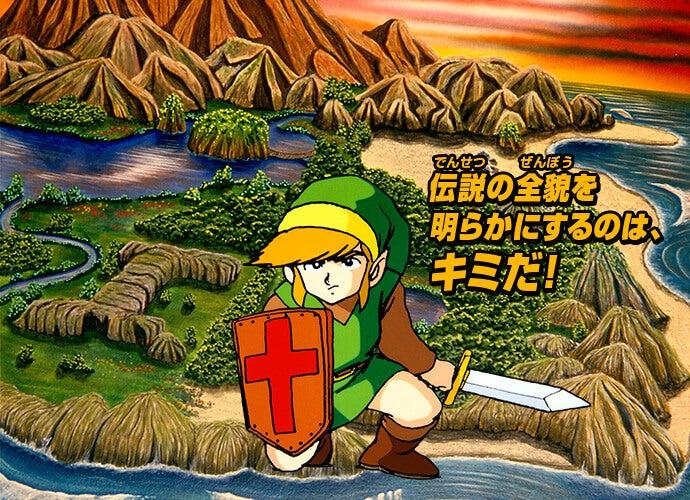
To a Catholic familiar with European history, the imagery immediately recalls medieval knights, Christian heraldry, and the use of the cross as a symbol of faith.
Throughout Christian history, the cross has represented Christ’s sacrificial death and victory over sin.
The Catechism of the Catholic Church, paragraph 617, identifies Christ’s sacrifice upon the Cross as the source of eternal salvation.
Of course, a cross-shaped emblem in a fantasy video game does not establish that Link himself was intended to be Christian.
Nor does it prove Nintendo was deliberately teaching Catholic theology.
Medieval European imagery has influenced countless Japanese fantasy works, from video games to manga and anime.
Nevertheless, the cross on Link’s shield is an authentic part of Zelda history.
And it was not the franchise’s only explicit Christian reference.
2. The Original Japanese Zelda Had an Item Called the Bible
Here is where things become particularly interesting.
In the Japanese version of the original The Legend of Zelda, players could obtain an item called the Bible, written in Japanese as バイブル (Baiburu).
Yes, the Bible.
The item appears in Nintendo’s Japanese documentation alongside the Magical Rod.
Obtaining it enhances the rod’s abilities, allowing Link to unleash magical flames against enemies.
When the game was localized for English-speaking audiences, the item became known as the Book of Magic.
The difference is significant.
The Japanese terminology explicitly borrows the name of Christianity’s sacred Scriptures, whereas the English name presents the object as an ordinary fantasy artifact.
Nintendo’s Japanese-language instruction materials confirm the designation.
However, the item’s gameplay function is clearly fictional. It does not reflect Christian teaching about the actual Bible, which Catholics recognize as the inspired Word of God.
The presence of the item should therefore be understood as evidence of Christian terminology appearing in early Japanese fantasy design—not as evidence that Zelda was intended to present the Christian faith accurately.
Still, for Catholics discovering the franchise’s history, this is a remarkable detail.
A game celebrated for its fictional gods, magical creatures, and ancient legends began with Christian references that were considerably more direct than many modern fans realize.
And the most extraordinary example was still to come.
3. Link Was Illustrated Praying Before Jesus Christ Crucified
Perhaps the most striking Christian image associated with The Legend of Zelda appeared in 1992.
That year, the Japanese publisher Shogakukan released an official Nintendo guidebook for The Legend of Zelda: A Link to the Past, known in Japan as The Legend of Zelda: Triforce of the Gods.
Inside the second volume, on page 151, is an illustration that can surprise even devoted fans.
Link is shown kneeling in prayer inside a chapel.
Before him hangs a crucifix depicting Jesus Christ.
A statue resembling a traditional representation of the Blessed Virgin Mary stands nearby.
The illustration is unmistakably Christian in its visual language.
This is not merely a fantasy temple decorated with vaguely religious symbols.
The central image is Christ crucified, with Link kneeling reverently before Him.
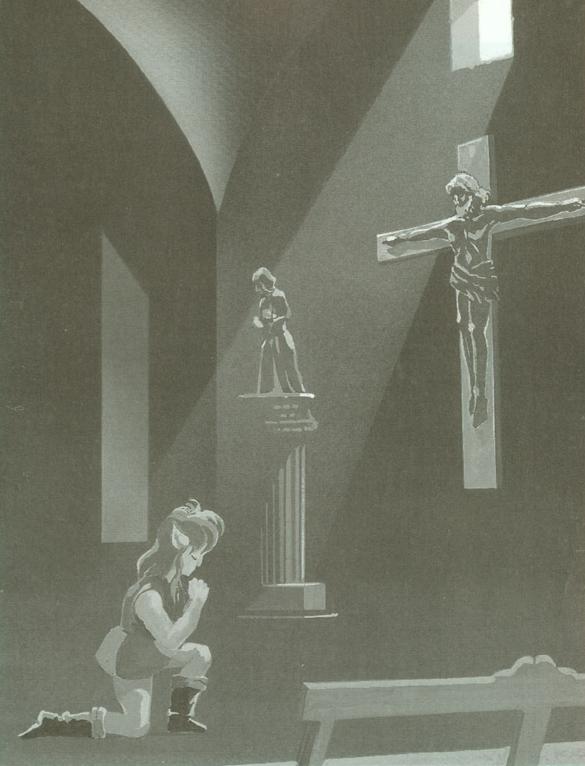
For Catholics, the scene evokes the traditional practice of praying before a crucifix, contemplating the Passion of Our Lord, and seeking His grace.
It also brings to mind the Blessed Virgin Mary’s place in Catholic devotional life.
But there is an important historical qualification.
The illustration appeared in an officially supervised Japanese guidebook, not in a playable scene from the game itself.
It does not establish that Link is canonically Catholic, nor does it transform Hyrule’s fictional religion into Christianity.
Nevertheless, it demonstrates how freely Christian iconography could appear in the franchise’s early Japanese supplementary materials.
Interestingly, the Japanese version of A Link to the Past also referred to the building known in English as the Sanctuary using terminology meaning church.
These details reveal an early stage of Zelda’s visual identity in which European Christian imagery coexisted with an emerging fictional mythology.
Later installments would develop Hyrule’s religious world much more extensively, particularly its legends concerning the three golden goddesses.
Even so, the image of Link kneeling before a crucifix remains a fascinating artifact of Nintendo history.
And it invites a deeper question.
Beyond the crosses and chapel illustrations, might the heroic adventures of Link themselves reflect virtues recognizable to Catholics?
4. Link and the Catholic Virtue of Fortitude
Anyone who has spent time playing Zelda knows that Link is more than a swordsman.
He is a hero defined by his willingness to confront danger.
Whether navigating the temples of Ocarina of Time, opposing the darkness threatening Hyrule in Twilight Princess, or awakening to a ruined kingdom in Breath of the Wild, Link continually faces circumstances that demand perseverance.
He encounters powerful enemies, impossible-looking obstacles, and forces that threaten the innocent.
Yet he continues his mission.
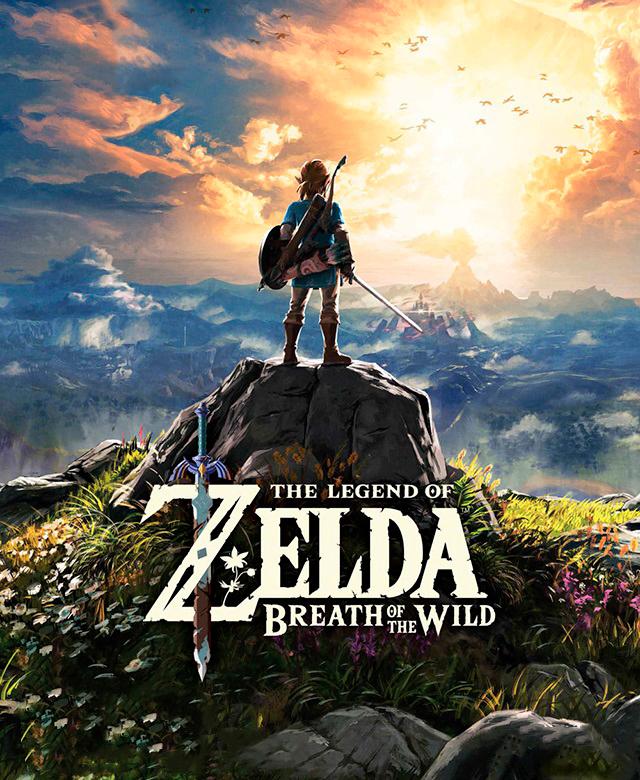
This provides an excellent illustration of the Catholic virtue of fortitude.
The Catechism of the Catholic Church, paragraph 1808, teaches that fortitude enables a person to remain firm amid difficulties and constant in the pursuit of good.
Fortitude does not mean never experiencing fear.
It means choosing what is good even when doing so is difficult or dangerous.
Consider the courage of the martyrs, who remained faithful to Jesus Christ in the face of persecution.
Or the saints who persevered through poverty, illness, and suffering while serving others.
Their courage was not simply physical bravery.
It was moral and spiritual steadfastness.
Link’s fictional adventures can help us recognize something similar.
He is frequently placed in situations where protecting others requires personal sacrifice.
This echoes the words of Our Lord:
Greater love than this no man hath, that a man lay down his life for his friends.
— John 15:13, Douay-Rheims Bible
Of course, Link is not Jesus Christ, and his fictional adventures do not constitute a retelling of the Gospel.
Nevertheless, his courage can remind Catholic players of the importance of selflessness.
True heroism is not merely possessing extraordinary strength.
It is using one’s abilities in the service of the good.
5. The Triforce: Courage, Wisdom, and the Danger of Power
Few symbols in gaming are as recognizable as the Triforce.
Its three golden triangles represent power, wisdom, and courage.
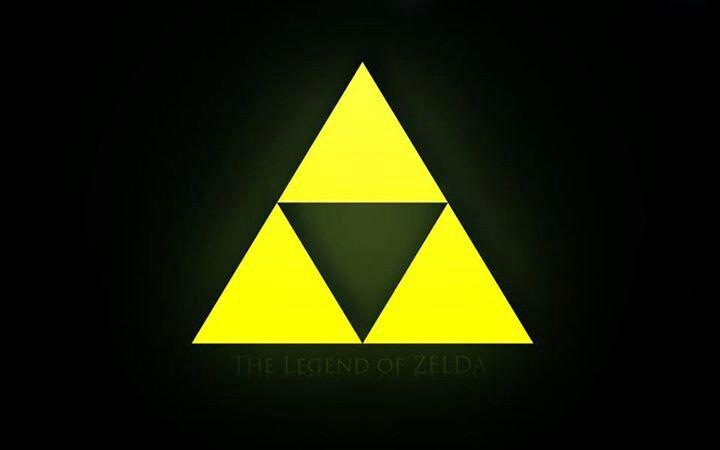
Throughout the Zelda franchise, these qualities are especially associated with three central characters.
Link represents courage.
Princess Zelda represents wisdom.
Ganondorf possesses the Triforce of Power.
Nintendo’s official explanation of the mythology describes the Triforce as an artifact left behind by the three golden goddesses who created Hyrule.
Those who seek to wield its complete power must possess the proper balance of its three qualities.
This mythology offers an interesting starting point for Catholic moral reflection.
Link: Courage and Fortitude
Link’s defining quality corresponds closely to the cardinal virtue of fortitude.
He demonstrates the willingness to endure danger in pursuit of a just goal.
But Catholic fortitude must be directed toward the good.
Recklessness and aggression are not automatically virtues simply because they require bravery.
Authentic courage must be guided by right reason.
Zelda: Wisdom and Prudence
Princess Zelda frequently embodies the importance of knowledge, discernment, and responsibility.
Her character can remind us of prudence, another cardinal virtue.
According to the Catechism, paragraph 1806, prudence enables reason to discern our true good and choose the proper means of achieving it.
Catholic wisdom goes beyond knowing facts.
It involves understanding how to live rightly before God.
Zelda’s association with wisdom provides an opportunity to reflect on the importance of thinking before acting, discerning consequences, and choosing the good rather than merely the convenient.
Ganondorf: Power Without Moral Restraint
Ganondorf offers perhaps the most compelling moral comparison.
He relentlessly pursues power and domination.
Rather than using strength to serve others, he seeks control over Hyrule.
His ambition illustrates the destructive potential of power disconnected from justice, wisdom, and charity.
Catholic moral teaching warns against pride and disordered desires, particularly when human beings make personal power an ultimate goal.
St. Thomas Aquinas explains that the moral goodness of human actions depends upon their proper ordering to right reason and the good (Summa Theologiae, I–II, q. 18).
Power alone does not make someone good.
A person may possess extraordinary strength, wealth, knowledge, or influence and still use those gifts unjustly.
That distinction is central to understanding the moral failures represented by Ganondorf.
The Triforce offers a fictional illustration of a genuine philosophical principle:
Power must be governed by wisdom and directed toward what is good.
6. Is the Triforce a Symbol of the Holy Trinity?
Because the Triforce consists of three interconnected triangles, some Christian fans have suggested that it represents the Holy Trinity.
It is an understandable visual comparison.
However, theologically, the two are fundamentally different.
Nintendo’s fictional mythology describes three goddesses:
Din, associated with power and the creation of the land; Nayru, associated with wisdom and the establishment of order; and Farore, associated with courage and the creation of life.
These are three separate divine figures within Hyrule’s mythology.
The Catholic doctrine of the Most Holy Trinity teaches something entirely different.
There is one God in three distinct divine Persons: the Father, the Son, and the Holy Spirit.
The three Persons are not three separate gods, nor are they three portions of God.
Each possesses the one indivisible divine nature fully and eternally.
The Catechism explains this mystery in paragraphs 253–255.
Therefore, the Triforce should not be described as a genuine representation of the Trinity.
A Catholic may find symbolic inspiration in its imagery, but the resemblance must not be confused with doctrinal equivalence.
This distinction is important whenever we examine religious themes in popular culture.
Not every threefold symbol is Trinitarian.
And not every fictional story about light overcoming darkness is intended to portray Christianity.
We can appreciate meaningful parallels without forcing a Catholic interpretation upon every detail.
7. Hyrule’s Battle Between Good and Evil
The struggle between good and evil is one of the most consistent themes throughout The Legend of Zelda.
Hyrule repeatedly experiences periods of peace threatened by forces of darkness.
Ancient evils return.
Kingdoms fall.
People suffer.
And ordinary life becomes disrupted by the ambitions of those who desire domination.
The hero is then called to confront the threat and help restore peace.
For Catholics, this structure can recall the spiritual conflict described throughout Sacred Scripture.
The Bible teaches that humanity’s history is marked by sin, temptation, suffering, and the struggle to remain faithful to God.
St. Paul writes:
Put you on the armour of God, that you may be able to stand against the deceits of the devil.
— Ephesians 6:11, Douay-Rheims Bible
The Christian life requires vigilance and perseverance.
Believers must resist temptation, practice virtue, seek forgiveness, and remain faithful amid adversity.
But there is also an essential difference between Hyrule’s story and Christianity.
In Zelda, evil is typically confronted through the hero’s adventures, legendary weapons, and extraordinary powers.
In Christianity, humanity’s decisive victory over sin and death belongs to Jesus Christ through His Passion, Death, and Resurrection.
Our salvation is not achieved through a magical artifact or legendary sword.
It comes through the grace of God.
Zelda’s recurring battle against darkness can nevertheless remind us that moral choices matter and that evil should never be accepted simply because resisting it is difficult.
8. Can Catholics Play The Legend of Zelda?
This is a question Catholic gamers and parents may reasonably ask.
The Zelda franchise contains fictional deities, magical abilities, monsters, supernatural creatures, and religious practices belonging to an invented world.
Does engaging with this kind of fantasy conflict with Catholic teaching?
Playing a fantasy game involving magic or fictional gods is not, by itself, the same as practicing the occult or worshipping false gods.
The Catechism of the Catholic Church, paragraphs 2116–2117, condemns actual divination, sorcery, and attempts to manipulate occult powers.
These prohibitions concern real actions and spiritual practices, not simply the presence of imaginary magic in a fictional adventure.
The distinction between fiction and participation is important.
Reading a story featuring a pagan deity does not necessarily constitute worship of that deity.
Likewise, controlling a fictional character who uses a magical sword does not automatically constitute sorcery.
However, Catholics are still called to exercise prudence in their entertainment.
A game should be evaluated according to its content, its effects upon the player, and the circumstances of its use.
Parents should consider the maturity of their children.
Players should examine whether their entertainment encourages unhealthy habits, neglect of responsibilities, or an attraction to genuinely harmful practices.
Even morally acceptable entertainment can become disordered when it dominates one’s life at the expense of prayer, family, work, and relationships.
The Catholic approach need not involve rejecting every fantasy world containing supernatural elements.
Instead, it should involve thoughtful discernment.
We are called to enjoy created goods in a properly ordered way, without allowing them to displace our highest good: God Himself.
For many Catholics, Zelda can remain an enjoyable form of recreation while also presenting opportunities to discuss courage, sacrifice, loyalty, wisdom, and the moral consequences of selfish ambition.
9. What Catholic Gamers Can Learn from Link
At its heart, The Legend of Zelda frequently asks its players to do something deceptively simple.
Persevere.
An obstacle stands in the way.
A dungeon must be explored.
A difficult enemy must be confronted.
A mystery must be understood.
And the player must decide whether to continue.
These experiences can become useful illustrations of the virtues necessary for Christian living.
We do not ordinarily confront dragons, enchanted forests, or ancient demons.
But we do confront temptation, discouragement, suffering, selfishness, and fear.
We must make difficult decisions.
We must protect those entrusted to our care.
We must choose between convenience and duty.
We must learn that doing what is right sometimes involves sacrifice.
The Catholic tradition reminds us that holiness is not limited to extraordinary historical figures.
Every Christian is called to grow in virtue.
The Catechism, paragraphs 1803–1811, explains the importance of moral virtues in ordering our actions and passions toward the good.
A video game cannot replace prayer, the sacraments, Sacred Scripture, or the teachings of the Church.
But a well-told story can prompt reflection on realities that matter far beyond its fictional world.
And sometimes the image of a courageous hero standing against darkness can remind us of a simple spiritual truth:
The good is worth defending, even when the struggle is difficult.
10. The Legend of Zelda and the Catholic Imagination
The early history of The Legend of Zelda offers a fascinating glimpse into the meeting of Japanese popular culture and Christian visual traditions.
Link’s cross-marked shield.
The original Japanese item named the Bible.
The official guidebook illustration of Link kneeling before a crucifix.
These are genuine historical details worth remembering.
They demonstrate that Christian imagery was present in some of the earliest materials associated with the franchise, even as Zelda developed its own mythology.
Yet the most meaningful Catholic engagement with Zelda may go beyond the discovery of religious symbols.
It lies in learning to examine stories thoughtfully.
Link’s courage can remind us of fortitude.
Zelda’s wisdom can inspire reflection on prudence.
Ganondorf’s obsession with power can warn against pride and ambition detached from moral goodness.
The recurring battle against darkness can evoke the spiritual struggle every Christian must face.
None of these parallels makes Zelda an officially Catholic story.
Nor should we confuse the fictional mythology of Hyrule with the truths of divine revelation.
But Catholics have long recognized that literature, art, and storytelling can illuminate aspects of human nature, morality, and the desire for goodness.
Video games are capable of participating in that same broader cultural conversation.
For Catholic G33k, that is what makes this particular franchise so interesting.
A Japanese video game series famous for its dungeons, magical swords, princesses, and monsters also contains an unexpected chapter of Christian imagery.
And nearly four decades after the original release, its stories continue to encourage players to consider the relationship between courage, wisdom, power, and goodness.
The Final Quest
In the world of Hyrule, Link’s adventures often begin with uncertainty.
He does not always know the dangers ahead.
He does not necessarily possess the strength required to complete his mission.
But he begins his journey.
And through perseverance, sacrifice, and courage, he seeks to restore what has been lost.
For Catholics, the greatest adventure is not found in a fictional kingdom.
It is found in the journey toward holiness.
That journey requires courage when we are afraid, wisdom when we are confused, humility when we are tempted by pride, and charity when serving others demands sacrifice.
Above all, it requires faithfulness to Jesus Christ.
St. Paul reminds us:
Be not overcome by evil, but overcome evil by good.
— Romans 12:21, Douay-Rheims Bible
Perhaps that is the most meaningful lesson a Catholic can take from The Legend of Zelda.
Not that Link is secretly Catholic.
Not that the Triforce is the Holy Trinity.
And not that the Master Sword represents the Cross.
But that even a fictional adventure can remind us of timeless moral truths.
Courage matters. Wisdom matters. Sacrifice matters. And goodness is always worth pursuing.
In Hyrule, the hero must rise to confront the darkness.
In the Christian life, we are called to follow the true Light of the world.
And that is an adventure far greater than any video game.
References and Further Reading
Nintendo and video game history
- Nintendo, The Legend of Zelda, original Famicom Disk System release (1986).
- Nintendo of America, The Legend of Zelda Instruction Booklet (1987), especially p. 20, depicting Link’s cross-marked shield, and p. 26, describing the Magic Book.
- Nintendo, Japanese instruction manual for The Legend of Zelda 1, Virtual Console edition, section 12, identifying the item バイブル (Bible).
- Shogakukan and APE, The Legend of Zelda: Triforce of the Gods — Nintendo Official Guidebook, Volume 2 (1992), p. 151, illustration of Link praying before a crucifix.
- Nintendo, The Legend of Zelda: Ocarina of Time (1998), creation narrative concerning Din, Nayru, and Farore.
- Nintendo, The Legend of Zelda official franchise materials, explanation of the Triforce and its three virtues.
Catholic theology and Sacred Scripture
- Catechism of the Catholic Church, §§253–255 — The Mystery of the Most Holy Trinity.
- Catechism of the Catholic Church, §617 — Christ’s Sacrifice and Redemption.
- Catechism of the Catholic Church, §§1803–1811 — The Cardinal Virtues.
- Catechism of the Catholic Church, §§2116–2117 — Divination and Magic.
- St. Thomas Aquinas, Summa Theologiae, I–II, q. 18 — The Good and Evil of Human Acts.
- The Holy Bible, Douay-Rheims translation: John 15:13; Romans 12:21; Ephesians 6:11.
Catholic G33k | Faith × Gaming × Culture
Exploring the intersection of Catholic faith, gaming, technology, history, and popular culture—discovering how timeless truths can illuminate the worlds we love.
The Legend of Zelda and its characters are trademarks and intellectual property of Nintendo. This article is an independent cultural and theological analysis and is not affiliated with or endorsed by Nintendo.