

POPE #1
Pope St. Peter
The Fisherman Chosen by Christ as the Rock, Shepherd, and First Pope
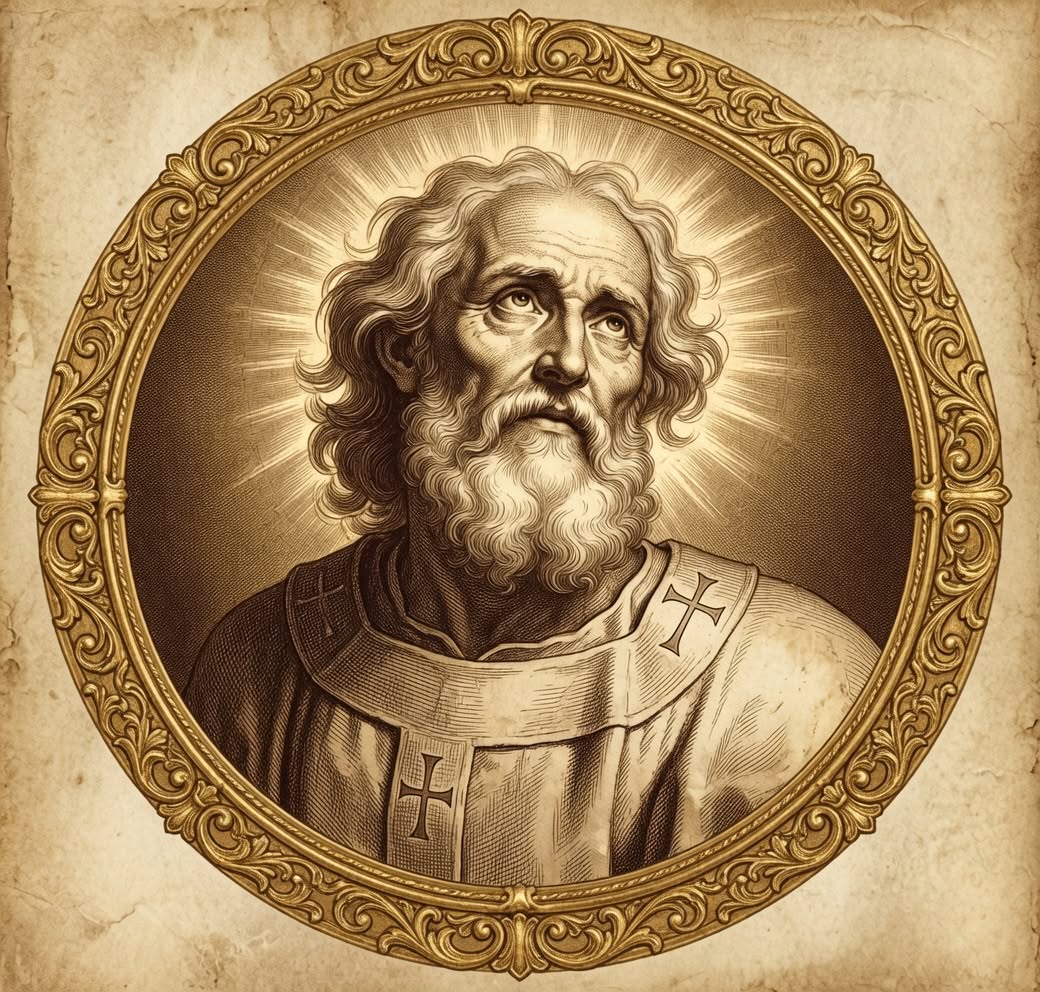
The Rock and Shepherd of Christ’s Flock
Simon Peter was a Galilean fisherman whom Jesus Christ called, renamed, formed, corrected, restored, and commissioned. He confessed Jesus as the Christ, received the Keys of the Kingdom, was commanded to strengthen his brethren, and was entrusted with the care of Christ’s sheep.
After the Resurrection and Pentecost, Peter emerged as the leading apostolic witness in Jerusalem, opened the Church’s mission decisively to the Gentiles, and completed his testimony in Rome through martyrdom. The Bishop of Rome succeeds to the enduring Petrine office of serving the Church’s unity in faith and communion.
“”And I say to thee: That thou art Peter; and upon this rock I will build my church, and the gates of hell shall not prevail against it.””
Explore Pope St. Peter
Historical Reading Note
The New Testament gives abundant evidence for Peter’s call, apostolic precedence, pastoral commission, failures, restoration, and early leadership. His martyrdom and ministry in Rome are supported by early and converging Christian testimony. The precise duration of his Roman ministry, exact year of death, and the later tradition of crucifixion upside down should be presented with appropriate historical qualification.
Quick Facts
Overview
St. Peter occupies a unique place within the apostolic college. He is consistently named first in the apostolic lists, frequently speaks for the Twelve, belongs to Christ’s innermost group of witnesses, and receives commands addressed to him personally for the good of the whole Church.
The Catholic doctrine of the papacy does not rest upon one isolated verse. It receives together Christ’s renaming of Simon, the promise of the Rock and Keys, the command to strengthen his brethren, the threefold commission to feed the flock, Peter’s leadership in Acts, and the succession of the Roman Church that preserved his final witness.
Peter’s holiness is not presented as natural flawlessness. His impulsiveness, misunderstanding, fear, denial, repentance, restoration, courage, and martyrdom reveal what grace accomplishes in a real human person.
Galilee, Family, and the Fisherman’s Life
Simon came from Bethsaida and later lived at Capernaum on the Sea of Galilee. He was the son of Jonah, also rendered John, and the brother of Andrew. The healing of his mother-in-law shows that he was married.
Fishing required teamwork, physical endurance, knowledge of weather and water, patience through fruitless labor, and readiness to act when the catch appeared. These features provide a fitting human background for the mission Christ would later express in the language of fishing for men and shepherding the flock.
Called and Renamed by Christ
Andrew brought Simon to Jesus, who declared that he would be called Cephas, translated Peter. The renaming anticipates a vocation that unfolds throughout the Gospels.
The Synoptic Gospels also place Peter’s call within the world of fishing. At the miraculous catch, Simon confronts his own sinfulness, yet Jesus tells him not to fear and gives him a new mission. Peter leaves his nets and follows.
“Thou art Simon the son of Jona: thou shalt be called Cephas, which is interpreted Peter.”
Formation among the Twelve
Peter appears at decisive moments in Christ’s ministry. He witnesses the raising of Jairus’s daughter, the Transfiguration, and the agony in Gethsemane. He steps from the boat toward Christ, asks questions on behalf of the disciples, receives correction, and repeatedly exposes both courageous faith and incomplete understanding.
His position first among the Apostles is a ministry within the apostolic college, not separation from it. James, John, Andrew, and the other Apostles retain their true authority and mission, while Peter receives a particular responsibility for unity and confirmation.
Key Formation Episodes
- The miraculous catch and confession of sin – Luke 5:1-11.
- Walking upon the water – Matthew 14:22-33.
- Confession at Caesarea Philippi – Matthew 16:13-20.
- Correction after rejecting the Cross – Matthew 16:21-23.
- The Transfiguration – Matthew 17:1-8.
- The Temple tax – Matthew 17:23-26.
- The washing of feet – John 13:1-11.
- Gethsemane, the sword, and the denial – John 18.
The Confession, the Rock, and the Keys
At Caesarea Philippi, Peter confesses Jesus as “Christ, the Son of the living God.” Jesus declares the confession revealed by the Father, names Simon as Peter, promises to build. His Church upon the rock, gives him the Keys of the Kingdom, and grants authority to bind and loose.
The imagery of the keys recalls the royal steward in Isaiah 22, who exercises delegated authority within the Davidic kingdom. Christ remains the supreme King and foundation; Peter receives a visible, ministerial authority under Him.
“”And I will give to thee the keys of the kingdom of heaven. And whatsoever thou shalt bind upon earth, it shall be bound also in heaven.””
What the Catholic Claim Means
- Christ Himself establishes Peter’s office.
- The authority is delegated and remains entirely dependent upon Christ.
- The office serves the indefectibility, unity, faith, discipline, and pastoral care of the Church.
- Peter remains a member of the apostolic college and does not abolish the authority of the other Apostles.
- The promise does not make Peter personally sinless, impeccable, omniscient, or inspired in every ordinary decision.
The Threefold Petrine Commission
The Petrine ministry is illuminated by three major commissions that should be read together.
Rock and Keys – Matthew 16:17-19
Peter receives a foundational and governing mission under Christ.
Strengthen Thy Brethren – Luke 22:31-32
Christ prays specifically for Peter’s faith and commands him, after conversion, to confirm the other disciples.
Feed My Lambs and Sheep – John 21:15-17
The risen Lord entrusts the whole flock to Peter through a threefold pastoral charge.
These commissions explain why the Catholic tradition sees Peter’s role as doctrinal, pastoral, and unifying rather than merely honorary.
The Passion, Denial, Repentance, and Restoration
Peter promises fidelity, attempts to defend Jesus with the sword, then denies Him three times under pressure. The Gospels preserve this failure openly. The first pope is not selected because he never falls, but because Christ’s grace can convert and strengthen him.
Peter weeps bitterly. After the Resurrection, Christ does not merely return him to private friendship. Beside the Sea of Galilee, the Lord answers the threefold denial with a threefold confession of love and a threefold pastoral commission.
Jesus then foretells that Peter will glorify God by his death. The restored sinner becomes a shepherd prepared for martyrdom.
Pentecost and Apostolic Leadership in Acts
Acts portrays Peter acting first in a series of foundational moments. He directs the replacement of Judas, preaches at Pentecost, calls the crowd to repentance and Baptism, heals in the name of Jesus, speaks before the Sanhedrin, confronts grave hypocrisy within the community, and exercises pastoral visitation beyond Jerusalem.
His Pentecost sermon proclaims the death, Resurrection, lordship, and messianic identity of Jesus. About three thousand persons receive Baptism, and the Church’s public mission begins in the power of the Holy Ghost.
Major Petrine Acts
- Leadership in choosing Matthias – Acts 1:15-26.
- Preaching at Pentecost – Acts 2:14-41.
- Healing the lame man – Acts 3:1-10.
- Witness before the Sanhedrin – Acts 4-5.
- Judgment concerning Ananias and Sapphira – Acts 5:1-11.
- Mission in Samaria – Acts 8:14-25.
- Healing Aeneas and raising Tabitha – Acts 9:32-43.
- Miraculous release from prison – Acts 12:1-19.
Cornelius and the Opening to the Gentiles
The conversion of Cornelius marks a decisive expansion of the Church’s visible mission. Through a divine vision, Peter learns not to call unclean what God has cleansed. The Holy Ghost descends upon the Gentiles while Peter is preaching, and he commands them to be baptized.
Peter then defends the event before Jewish Christians in Jerusalem. The episode does not portray Peter inventing a new religion. It shows him recognizing and authoritatively witnessing what God has done.
This moment prepares the Church for the later Jerusalem deliberation concerning Gentile converts.
The Council of Jerusalem
When controversy arose over whether Gentile converts must be circumcised and observe the Mosaic law, Peter gave decisive testimony: God had purified the Gentiles by faith, and both Jews and Gentiles are saved through the grace of the Lord Jesus Christ.
After Peter’s intervention and the testimony of Paul and Barnabas, St. James proposed the practical pastoral formulation reflected in the apostolic decree. The passage displays Petrine testimony, apostolic deliberation, and local pastoral leadership working together.
The scene presents Petrine testimony, apostolic deliberation, and James’s pastoral formulation within the communion of the Apostles.
Antioch, St. Paul, and Fraternal Correction
Galatians records that Paul opposed Peter at Antioch because Peter withdrew from table fellowship with Gentile Christians under social pressure. Paul judged that conduct inconsistent with the truth of the Gospel.
The incident shows that Peter remained personally fallible and could act imprudently or hypocritically. It does not record Peter defining false doctrine for the universal Church. Papal infallibility never means that a pope’s behavior, discipline, private opinion, or every public remark is preserved from error.
The episode also shows that legitimate fraternal correction can serve communion without abolishing office.
Missionary Journeys and the Tradition of St. Mark
Peter traveled in the exercise of his apostolate. Scripture places him in Jerusalem, Samaria, Lydda, Joppa, Caesarea, and Antioch, while early tradition connects him finally with Rome.
First Peter calls Mark “my son.” Papias and Clement of Alexandria, preserved by Eusebius, associate the Gospel according to Mark with Peter’s preaching. This tradition should be presented as ancient testimony rather than as a stenographic claim that every line came directly from Peter.
First Corinthians 9:5 also indicates that Cephas traveled with a believing wife, supporting the scriptural evidence that Peter was married.
Peter in Rome the Historical Evidence
The New Testament does not narrate Peter’s arrival in Rome, but early Christian testimony converges upon his Roman ministry and martyrdom. The exact sequence and duration of his stays remain uncertain.
New Testament Clue
First Peter 5:13 sends greetings from “Babylon,” an early Christian designation traditionally understood as Rome, together with Mark.
First-Century Roman Witness
First Clement, written from the Church of Rome near the end of the first century, presents Peter and Paul as recent examples of apostolic suffering and martyrdom.
Second-Century Witnesses
- St. Ignatius of Antioch tells the Romans that he does not command them as Peter and Paul did.
- Dionysius of Corinth, preserved by Eusebius, associates Peter and Paul with teaching and martyrdom in Italy.
- St. Irenaeus identifies the Roman Church as founded and organized by Peter and Paul and gives the succession through Linus.
The Memorial on Vatican Hill
Gaius of Rome, preserved by Eusebius, points to the memorials or “trophies” of Peter and Paul at the Vatican and on the Ostian Way. This testimony links the apostles with known Roman burial sites by the early third century.
The historical case rests upon convergence, antiquity, and the absence of a rival ancient burial tradition – not upon one late medieval legend.
Martyrdom under Nero
Peter’s martyrdom in Rome during or near the Neronian persecution is among the strongest ancient traditions concerning his final years. John 21:18-19 anticipates a death by which Peter would glorify God, and First Clement gives early testimony to his suffering and martyrdom.
Crucifixion is supported by ancient Christian tradition. The specific account that Peter requested an inverted cross appears in later apocryphal and patristic tradition. It is venerable and fitting, but should not be presented with the same certainty as Peter’s Roman martyrdom itself.
The surviving evidence supports a qualified date range of c. AD 64-67 under Nero. A precise execution day belongs to later liturgical or devotional tradition rather than securely documented chronology.
The Tomb of St. Peter and the Vatican Basilica
Ancient testimony locates Peter’s memorial on Vatican Hill. Constantine built the first great basilica over the venerated site despite the engineering difficulty of constructing upon the slope and necropolis.
Twentieth-century excavations beneath St. Peter’s Basilica uncovered the Roman necropolis, the early memorial associated with Gaius’s “trophy,” and a complex history of burial and veneration. The present papal altar stands above the traditional tomb.
Archaeology strongly illuminates the antiquity of the site’s veneration, but the identity of individual bone fragments should be described carefully. The Catholic faith in Peter’s office does not depend upon laboratory proof of a relic.
The Petrine Writings and Preaching Tradition
First Peter
First Peter addresses Christians as a holy people living amid trial. Major themes include new birth, Baptism, the priestly people of God, holiness, suffering with Christ, witness, family and social duties, humility, and pastoral shepherding.
Second Peter
Second Peter emphasizes growth in virtue, participation in the divine nature, apostolic eyewitness, the interpretation of prophecy, resistance to false teachers, and hope for the coming of the Lord and the new heavens and new earth.
Peter and the Gospel according to Mark
Ancient witnesses associate Mark’s Gospel with Peter’s preaching in Rome. This tradition belongs in the page’s discussion of Peter’s lasting apostolic influence, while questions of literary composition should be expressed with scholarly restraint.
Apocryphal Petrine Literature
Several later writings bear Peter’s name but were not received as canonical Scripture. They may preserve elements of early devotion or tradition, but they must not be treated as equal to the canonical epistles or the earliest historical witnesses.
Feasts, Titles, Symbols, and Patronage
Principal Feasts
- June 29: Solemnity of Saints Peter and Paul, Apostles.
- February 22: Feast of the Chair of St. Peter.
Traditional Titles
- Prince of the Apostles.
- First Pope and first Bishop of Rome.
- Rock of the Church under Christ.
- Keeper of the Keys.
- Fisher of men and shepherd of the flock.
- Apostle and martyr.
Principal Symbols
- Keys: authority entrusted by Christ.
- Inverted cross: the traditional manner of martyrdom.
- Boat and net: Galilean calling and mission.
- Rooster: denial, repentance, and mercy.
- Scroll or book: apostolic preaching and epistles.
Historical Context
Peter lived within the Jewish world of Galilee and Jerusalem under Roman rule. His ministry spans the reigns of Tiberius, Caligula, Claudius, and Nero; the earthly ministry, Passion, Resurrection, and Ascension of Christ; Pentecost; the expansion from Jerusalem into Judea, Samaria, and the Gentile world; and the first imperial persecution at Rome.
The early Church was discerning how Jews and Gentiles could live within one covenant communion. Peter’s leadership is inseparable from this missionary and ecclesial transition.
Key Acts and Historical Significance
- Confessed Jesus as the Christ and Son of the living God.
- Received the name Peter and the Keys of the Kingdom.
- Was commanded to strengthen the brethren and feed Christ’s flock.
- Acted as first spokesman and principal visible leader among the Apostles.
- Directed the replacement of Judas.
- Preached the first apostolic sermon at Pentecost.
- Witnessed through preaching, miracles, discipline, and pastoral visitation.
- Opened the visible mission decisively to the Gentiles through Cornelius.
- Gave decisive testimony at the Council of Jerusalem.
- Served the Church in Rome and sealed his witness through martyrdom.
- Left an enduring apostolic succession in the Roman See.
- Gave the Church two canonical epistles bearing his name.
Timeline
Dates before Peter’s martyrdom are approximate and should not be presented as a modern administrative chronology.
Simon is born in Bethsaida; the precise date is unknown.
Andrew brings Simon to Jesus; Christ gives him the name Cephas or Peter.
Peter leaves his fishing work to follow Christ.
Peter confesses Jesus as the Christ and receives the promise of the Rock and Keys.
Peter denies Christ, repents, encounters the risen Lord, and receives the pastoral commission.
Peter preaches at Pentecost and about three thousand are baptized.
Peter leads, preaches, heals, judges, visits communities, and is imprisoned and delivered.
Peter baptizes Cornelius and defends the Gentile mission.
Peter gives decisive testimony at the Council of Jerusalem.
Peter's missionary activity includes Antioch and other regions; exact chronology remains uncertain.
Peter ministers in Rome according to ancient and converging testimony.
Peter is martyred by crucifixion under Nero and buried on Vatican Hill according to ancient tradition.
St. Linus succeeds in the Roman episcopate according to the traditional succession.
The Church celebrates the Solemnity of Saints Peter and Paul.
The Church celebrates the Feast of the Chair of St. Peter.
Common Misconceptions
“Peter had to be sinless in order to be the first pope.”
The Gospels openly record his misunderstanding, denial, and need for conversion. The Petrine office depends upon Christ’s call and promise, not personal impeccability.
“St. Paul’s correction at Antioch disproves Petrine primacy.”
Paul corrected inconsistent conduct. The episode is not a false universal doctrinal definition and does not contradict the limited Catholic doctrine of papal infallibility.
“St. James replaced Peter at the Council of Jerusalem.”
Peter gives decisive testimony concerning salvation by grace; James proposes the practical formulation for the local Jerusalem setting. The account shows differentiated authority within apostolic communion.
“Peter’s connection with Rome was invented in the Middle Ages.”
The Roman tradition is witnessed by early sources including First Clement, Ignatius, Dionysius of Corinth, Irenaeus, and Gaius, centuries before the medieval period.
“The inverted crucifixion is as certain as Peter’s martyrdom.”
Roman martyrdom is supported by early converging testimony. The inverted manner is a later but venerable tradition and should be labeled accordingly.
“Because Peter did not use the later title ‘pope,’ the office did not exist.”
Titles develop. The Catholic claim concerns the office and commission Christ gave Peter, not whether first-century Christians used every later Latin designation.
Did You Know?
The title “pope” was not St. Peter’s ordinary personal title. The word developed from a term meaning “father” and was used more broadly before becoming reserved in the Latin Church to the Bishop of Rome. The absence of the later title in the apostolic age does not imply the absence of the Petrine office.
Why Pope St. Peter Matters
Peter matters because Christ chose to make the Church visibly apostolic and ordered. The same disciple who confesses, fails, repents, and is restored becomes the instrument through whom Christ serves the unity of His flock.
His Roman martyrdom joins apostolic authority to sacrificial witness. The Chair of Peter is not a throne of self-exaltation but an office ordered toward confirming faith, guarding communion, shepherding the universal Church, and pointing every generation back to Jesus Christ.
Peter also gives every Christian a pattern of hope. Failure need not become final betrayal when grace produces repentance, confession, renewed vocation, and perseverance.
CatholicG33k Historical Highlight
Jesus did not choose a flawless court official to become the visible rock of His Church. He chose a working fisherman whose courage and fear, insight and confusion, loyalty and denial would all be exposed before the world.
At Pentecost, the man who had once trembled before a servant girl stood publicly before Jerusalem and proclaimed the risen Christ. In Rome, according to ancient tradition, the restored shepherd completed the command “Follow me” through martyrdom.
Prayer through the Intercession of St. Peter
Lord Jesus Christ, Thou didst call Simon from his nets, name him Peter, pray for his faith, restore him after his denial, and command him to feed Thy flock.
Through the intercession of St. Peter, strengthen the faith of Thy Church, preserve the successor of Peter, heal division, convert sinners, and give us courage to confess Thee before the world.
Teach us to repent when we fall, to receive Thy mercy without presumption, and to follow Thee faithfully even unto death.
Amen.
Scripture References
- Matthew 4:18-22; 10:2; 14:22-33; 16:13-23; 17:1-8; 17:23-26; 18:18; 19:27-30; 26:31-75.
- Mark 1:16-31; 3:16; 5:37; 8:27-33; 9:2-8; 13:3; 14:27-72.
- Luke 5:1-11; 6:14; 8:51; 9:18-36; 12:41; 18:28; 22:31-34; 22:54-62; 24:12 and 34.
- John 1:40-44; 6:67-69; 13:1-11; 13:36-38; 18:10-27; 20:1-10; 21:1-23.
- Acts 1:13-26; 2-5; 8:14-25; 9:32-43; 10-12; 15:1-29.
- Galatians 1:18; 2:1-14.
- First Corinthians 1:12; 3:22; 9:5; 15:5.
- First Peter 1-5.
- Second Peter 1-3.
Magisterial and Liturgical Sources
- Catechism of the Catholic Church, 552-553 and 880-882.
- First Vatican Council, Pastor Aeternus, chapters 1-4.
- Second Vatican Council, Lumen Gentium, 18-23.
- St. John Paul II, Ut Unum Sint, 88-96.
- Benedict XVI, General Audiences on St. Peter and the Chair of Peter, 2006.
- Roman Missal and Liturgy of the Hours for June 29 and February 22.
Primary Historical Sources
- St. Clement of Rome, First Epistle to the Corinthians, 5-6.
- St. Ignatius of Antioch, Letter to the Romans, 4.
- St. Irenaeus of Lyons, Against Heresies, III.1 and III.3.
- Tertullian, Prescription against Heretics, 32 and 36.
- Gaius of Rome, fragments preserved in Eusebius, Church History, II.25.
- Dionysius of Corinth, testimony preserved in Eusebius, Church History, II.25.
- Eusebius of Caesarea, Church History, II.14-15, II.25, III.1-3, and III.39.
- St. Jerome, On Illustrious Men, 1.
- Acts of Peter, used only as a later witness to the inverted-crucifixion tradition.
Research Works Consulted
- Stephen J. Binz, Saint Peter: Flawed, Forgiven, and Faithful.
- Michael Grant, Saint Peter: A Biography.
- Francis Underhill, Saint Peter.
- William J. La Due, The Chair of Saint Peter: A History of the Papacy.
- Rupert Matthews, The Popes: Every Question Answered.
- Catholic Encyclopedia, “St. Peter, Prince of the Apostles.”
- Catholic Encyclopedia, “List of Popes.”
- Catholic Encyclopedia, “Tomb of St. Peter.”
- Catholic Encyclopedia, “Chair of Peter.”