

POPE #191
Pope Nicholas IV
The 191st Pope of the Catholic Church
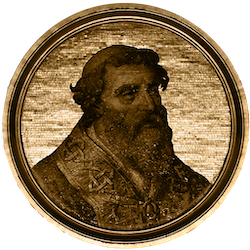
Nicholas IV
Pope Nicholas IV was the First Franciscan Pope
“Go ye into the whole world, and preach the gospel to every creature.”
Explore This Pope
Quick Facts
Overview
Pope Nicholas IV was the First Franciscan Pope in the history of the Catholic Church.
A devoted son of St. Francis of Assisi, Nicholas brought the Franciscan spirit of humility, missionary zeal, and love for the poor to the papacy.
His pontificate is especially remembered for expanding Catholic missionary activity, encouraging evangelization in Asia, supporting universities, restoring churches in Rome, promoting peace among Christian rulers.
Although political tensions remained throughout Europe, Nicholas consistently emphasized the Church’s universal mission to proclaim the Gospel.
Early Life
Nicholas IV was born around September 30, AD 1227 as Girolamo Masci at Lisciano, near Ascoli Piceno, in the Papal States.
As a young man, he entered the Order of Friars Minor (the Franciscans), where he became known for his holiness, learning, and administrative ability.
He studied Theology, Sacred Scripture, Canon Law.
Service Before the Papacy
Girolamo served as Franciscan theologian, Minister General of the Franciscan Order, Papal diplomat, Cardinal-Bishop of Palestrina.
He represented the Holy See on diplomatic missions, including efforts toward reconciliation with the Byzantine Church following the Second Council of Lyon.
His leadership within the Franciscan Order earned widespread respect throughout Christendom.
Becoming Pope
Following the death of Pope Honorius IV, the Church experienced another lengthy: Sede Vacante lasting almost: Eleven Months.
Finally, the cardinals elected Girolamo Masci on February 22, AD 1288.
He accepted the name Nicholas IV.
His election marked the first time a member of the Franciscan Order became pope.
Missionary Expansion
Missionary work became the defining feature of Nicholas’ pontificate.
He sent missionaries to: China, Mongolia, Persia, Armenia, India, the Holy Land.
Among those he commissioned was: John of Montecorvino, who would later become the first Archbishop of Beijing (Khanbaliq) and one of the greatest Catholic missionaries of the Middle Ages.
Nicholas also maintained diplomatic contacts with leaders of the Mongol Empire, hoping both to spread the Gospel and to strengthen cooperation with Christian communities in Asia.
Support for the Franciscans
Nicholas remained deeply devoted to his Franciscan vocation.
He encouraged faithful observance of the Rule of St. Francis, missionary preaching, theological education, service to the poor.
He also maintained excellent relations with the Dominicans, Augustinians, Carmelites, recognizing the importance of all the mendicant orders in the Church’s evangelizing mission.
Universities and Scholarship
Nicholas promoted universities, theological education, biblical studies, canon law.
He encouraged bishops to appoint well-educated clergy capable of preaching and teaching the Catholic faith with clarity and charity.
Building Projects
Nicholas undertook significant restoration work in Rome, especially at Santa Maria Maggiore, the Lateran Palace, several churches and charitable institutions.
He also contributed to improvements at the Vatican Palace, continuing work begun by earlier popes.
Relations with the Holy Roman Empire
Nicholas maintained cordial relations with Rudolf I of Habsburg, supporting stability within the Empire while preserving the independence of the Holy See.
Following Rudolf’s death in AD 1291, Nicholas encouraged a peaceful imperial succession.
Church Reform
Nicholas continued promoting: clerical discipline, episcopal oversight, missionary outreach, theological education, faithful observance of canon law.
He also encouraged charitable works throughout Christendom.
Death
Nicholas died on April 4, AD 1292 in Rome.
His death was followed by another prolonged: Sede Vacante, lasting more than: Two Years, before the election of St. Celestine V.
Historical Context
Political Leaders Rudolf I of Habsburg King of the Romans (until AD 1291).
Philip IV King of France.
Edward I King of England.
Arghun Khan Ruler of the Ilkhanate, with whom papal diplomatic contacts continued.
The Church
During Nicholas’ pontificate, the first Franciscan pope governed the Church, missionary activity expanded dramatically into Asia, universities flourished, Roman churches were restored, diplomatic relations with the Mongols continued.
Challenges
Long Papal Vacancy. Before His Election The Church experienced nearly eleven months without a pope.
Political Tensions
European rivalries continued despite Nicholas’ efforts toward peace.
Missionary Expansion
Organizing missions across Asia required immense logistical and diplomatic effort.
Key Acts and Historical Significance
- 191st Pope of the Catholic Church
- First Franciscan pope
- Expanded Catholic missions to Asia
- Commissioned John of Montecorvino
- Strengthened diplomatic relations with the Mongols
- Supported universities and theological education
- Restored churches in Rome
- Continued Church reform
Interesting Facts
- Nicholas IV was the first Franciscan pope.
- He commissioned John of Montecorvino, who became the first Catholic Archbishop of Beijing (Khanbaliq).
- His pontificate marked one of the greatest expansions of Catholic missionary activity into Asia during the Middle Ages.
- He remained deeply devoted to the ideals of St. Francis of Assisi even after becoming pope.
- His death led to another prolonged papal vacancy, eventually resulting in the election of St. Celestine V.
Legacy
Pope Nicholas IV brought the missionary spirit of the Franciscan Order to the Chair of St. Peter. His vision extended far beyond Europe as he encouraged evangelization throughout Asia, sending missionaries to lands few Western Christians had ever reached. His support for John of Montecorvino laid the foundations for a lasting Catholic presence in China and demonstrated the Church’s universal mission to preach the Gospel to all nations.
At the same time, Nicholas promoted theological education, strengthened the mendicant orders, restored important churches in Rome, and continued the reforming work of his predecessors. His pontificate stands as one of the great missionary eras of the medieval papacy, showing that the Church’s concern for souls transcends political boundaries and cultural differences.
Did You Know?
Pope Nicholas IV sent the Franciscan missionary John of Montecorvino to China in AD 1289. After years of arduous travel, John established Catholic communities, translated parts of Scripture and the liturgy into local languages, and was eventually appointed the first Archbishop of Beijing (Khanbaliq) by a later pope. His mission became one of the greatest achievements of medieval Catholic evangelization.
Why Pope Nicholas IV Matters
Pope Nicholas IV transformed the missionary outreach of the medieval Church. As the first Franciscan pope, he combined the humility of St. Francis with a bold vision of evangelizing the world. His support for missions to China, Mongolia, Persia, and beyond helped establish some of the earliest enduring Catholic communities in East Asia, demonstrating the truly universal mission of the Church.
CatholicG33k Historical Highlight
The First Franciscan Pope and the Road to China
When Girolamo Masci became Pope Nicholas IV, the ideals of St. Francis of Assisi reached the Chair of St. Peter for the first time. Rather than focusing solely on Europe, Nicholas looked eastward, commissioning courageous missionaries to travel thousands of miles across deserts and mountains to proclaim the Gospel in Asia. His decision to send John of Montecorvino eventually led to the establishment of the first Catholic archdiocese in Beijing, making Nicholas IV one of the great missionary popes of the Middle Ages. His pontificate reminds Catholics that Christ’s command to “preach the gospel to every creature” extends to every nation and every generation.
Sources and Further Study
Scripture References
- Mark 16:15
- Matthew 28:19-20
- Matthew 16:18-19
- John 21:15-17
- Romans 10:14-15
- Isaiah 52:7
- 1 Peter 5:2-4
Primary Historical Sources
- Sacred Scripture (Douay-Rheims Bible)
- Papal Registers of Nicholas IV
- Letters of Pope Nicholas IV concerning the missions to Asia
- John of Montecorvino, surviving missionary letters
- Liber Pontificalis (later continuations)
- Bernard Gui, De Viris Illustribus
- Early medieval papal catalogues
Timeline
Born as Girolamo Masci
Minister General of the Franciscan Order
Elected Pope
Commissions John of Montecorvino for missions in Asia
Death of Rudolf I of Habsburg
Dies in Rome