

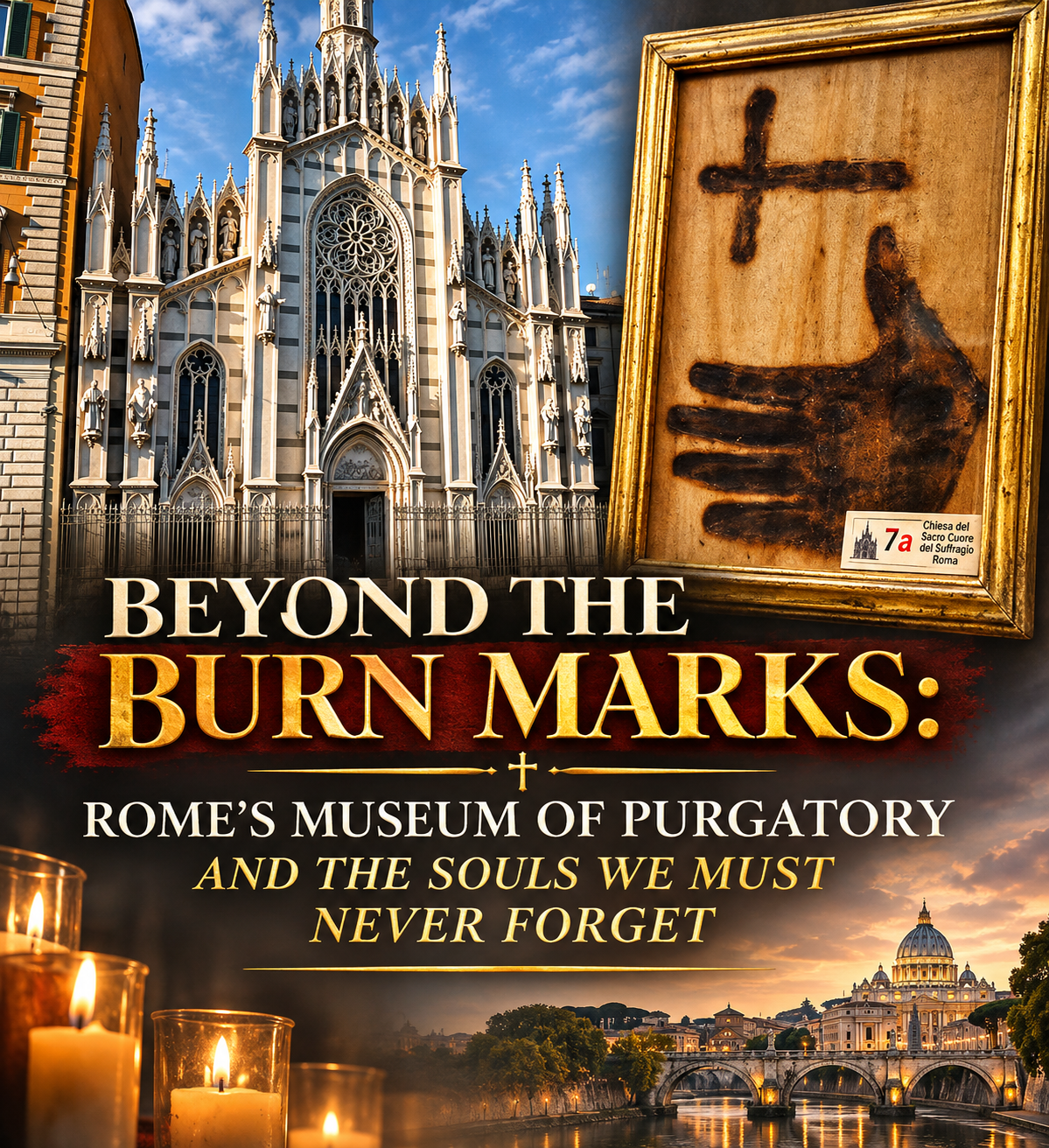
An extraordinary little museum, a centuries-old Catholic devotion, and a powerful reminder that death does not end our responsibility to love.
A Mysterious Museum in the Heart of Rome
Rome is a city where centuries of Christian history surround the pilgrim. Beneath magnificent basilicas, along ancient streets, and behind unassuming church doors are countless reminders of the Catholic faith.
Yet one of Rome’s most unusual religious collections is not found in a grand Vatican gallery.
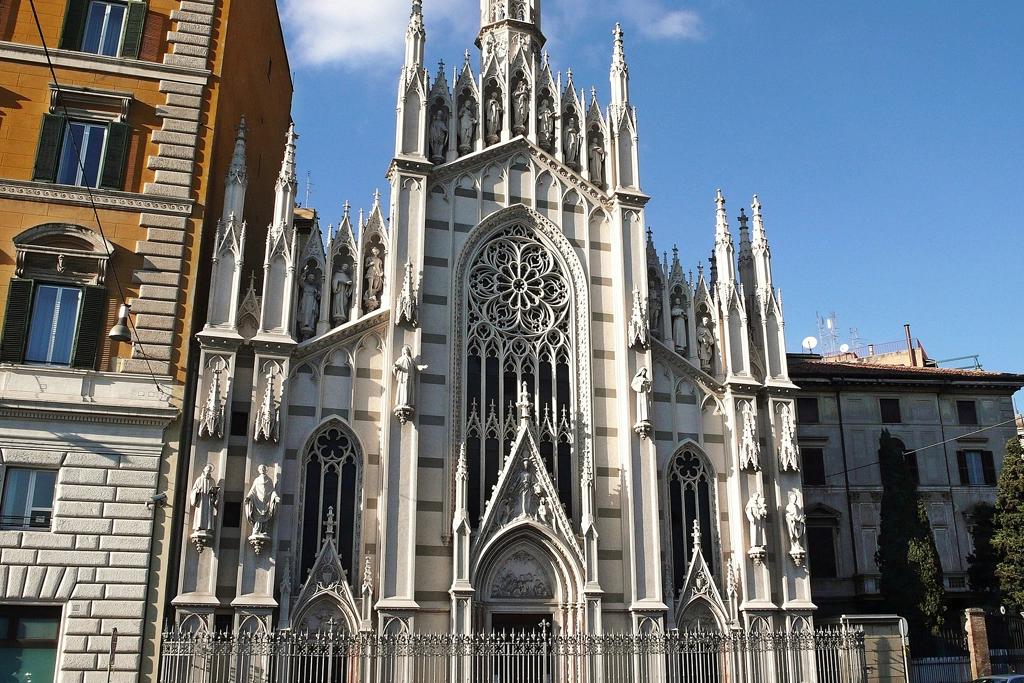
It occupies a small space beside the sacristy of the Church of the Sacred Heart of Suffrage, overlooking the River Tiber.
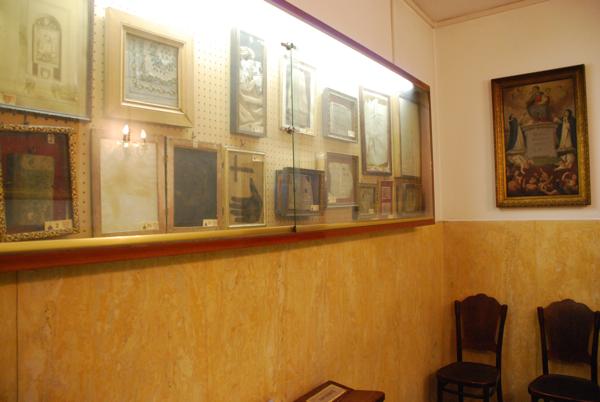
Its name is the Museum of the Souls of Purgatory (Museo delle Anime del Purgatorio).
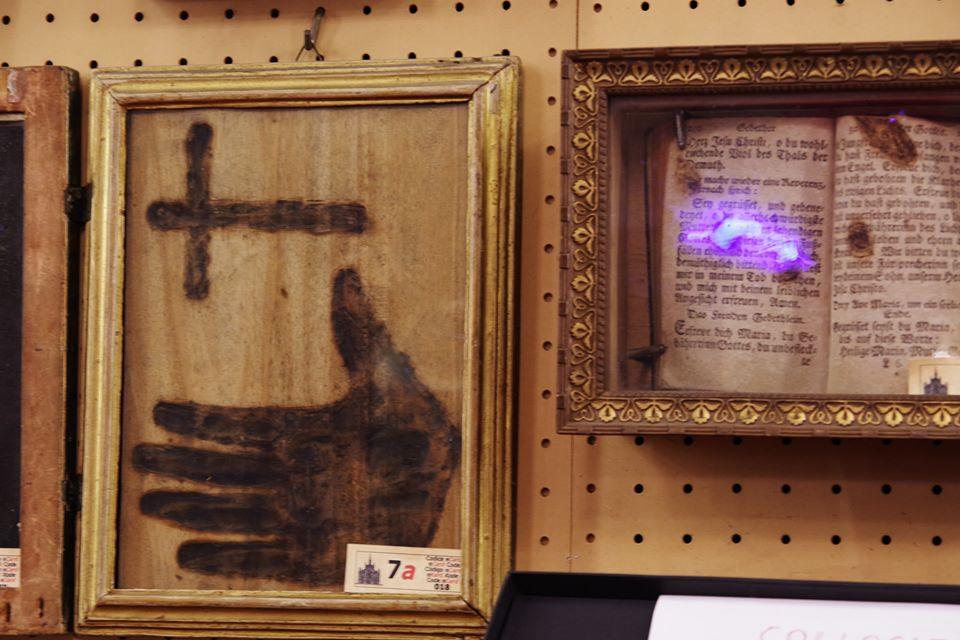
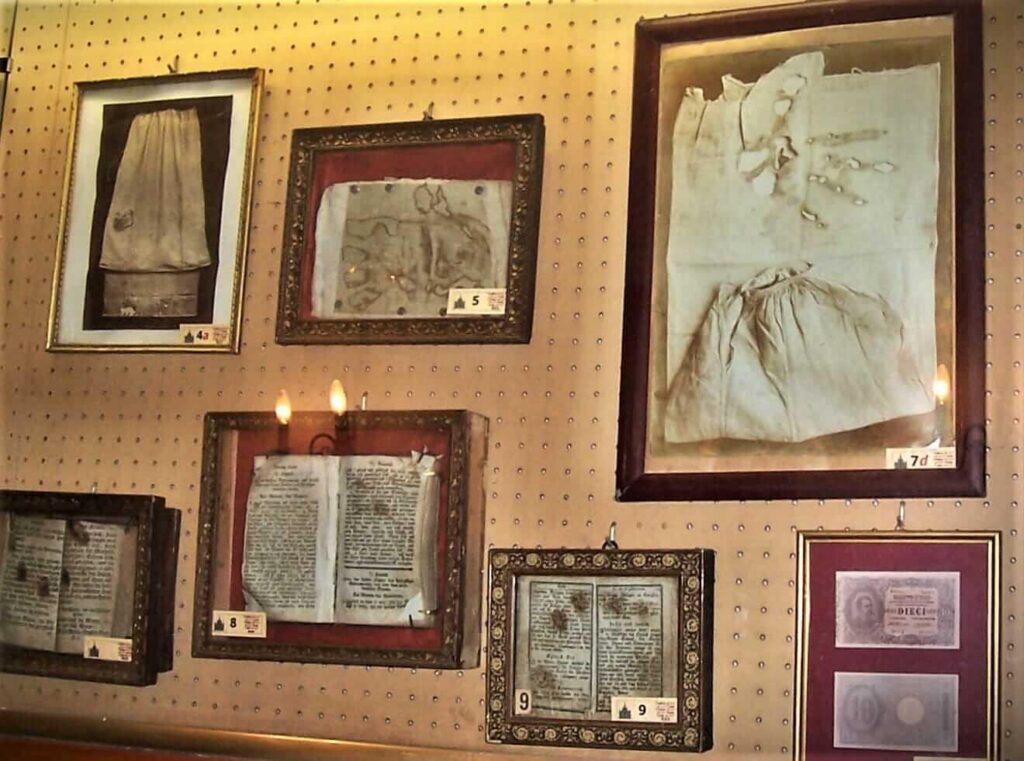
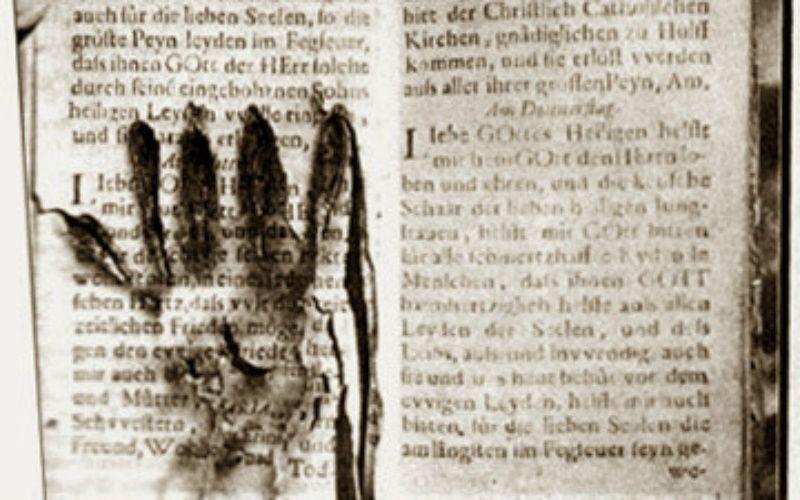
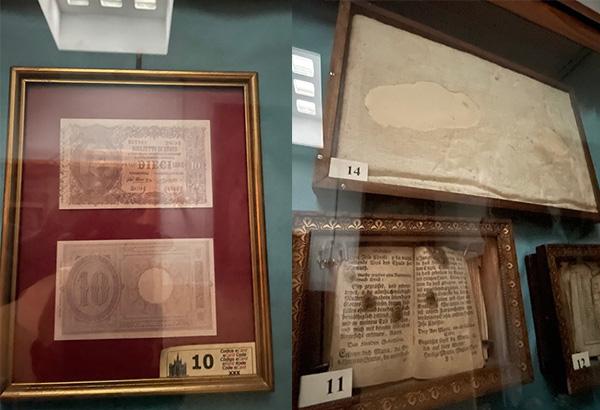
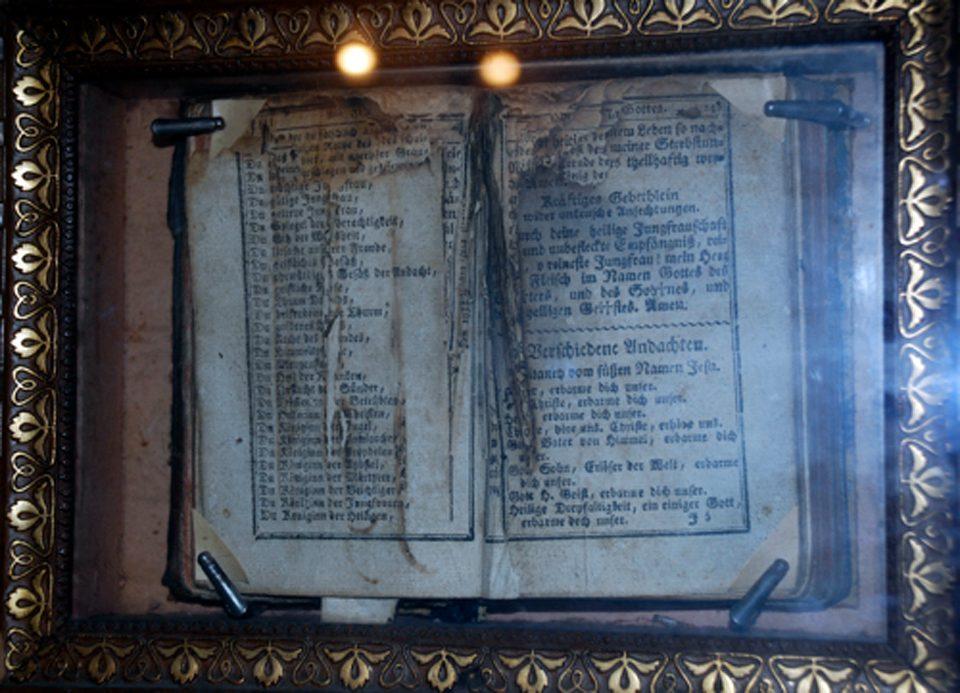
The collection contains objects associated with extraordinary historical accounts: old prayer books, pieces of clothing, religious garments, and other materials bearing unusual marks traditionally attributed to deceased persons.
According to the accounts preserved with these exhibits, certain souls appeared to the living, asking for prayers and Holy Masses.
Some objects bear impressions resembling hands or fingers. Others display marks described as burns.
The stories are remarkable.
But the most important question raised by this little museum is not whether a departed soul once left a mark on a piece of cloth.
It is whether we, the living, have forgotten our obligation of charity toward the dead.
And during November, that question deserves our serious attention.
The Fire That Inspired an Unusual Collection
The museum’s origins are connected to Father Victor Jouët, a French missionary deeply devoted to praying for the faithful departed.
On November 15, 1897, a fire occurred in a chapel dedicated to Our Lady of the Rosary on the site of the present church.
According to the historical account, several witnesses believed they saw the image of a suffering human face amid the flames.
The reported incident profoundly affected Father Jouët.
He subsequently traveled through Europe collecting objects and testimonies associated with alleged appearances of deceased persons.
The resulting collection eventually became the small museum that visitors can still encounter in Rome.
Importantly, these exhibits must be approached with proper Catholic discernment.
The Church’s doctrine of Purgatory is certain. The supernatural interpretation of any particular museum object is not.
The presence of such objects in a church does not establish that every alleged apparition occurred or that every mark has a supernatural origin.
Catholics are not required to accept these stories as authentic.
Our faith rests upon God’s revelation, faithfully handed down through Sacred Scripture and Sacred Tradition—not upon mysterious physical objects.
Nevertheless, the museum has historical and devotional significance.
It preserves evidence of how seriously generations of Catholics regarded the spiritual duty of remembering those who had died.
And it directs our attention toward a doctrine that modern society too often neglects.
Purgatory Is Not a Second Chance After Death
To understand the significance of the museum, we must understand what the Catholic Church actually teaches about Purgatory.
Purgatory is not an alternative to Heaven and Hell.
It is not a place where souls who rejected God receive another opportunity to change their eternal destiny.
Nor is it a state of hopeless abandonment.
The Catechism of the Catholic Church teaches:
Those who die in God’s grace and friendship, but who still require purification, are assured of eternal salvation. Before entering the fullness of heavenly glory, they undergo the purification necessary for perfect holiness.
— Catechism of the Catholic Church, 1030–1031.
This distinction is essential.
The souls in Purgatory belong to Christ.
They are not damned.
Their salvation is secure through His mercy and redeeming sacrifice.
Yet nothing imperfect can enter the fullness of God’s eternal presence (cf. Apocalypse 21:27).
Imagine a soul that truly loves God but still bears the wounds of selfishness, disordered attachments, and the consequences of forgiven sins.
Such a soul does not need another Redeemer.
It needs the complete application of the purification made possible by the one Redeemer, Jesus Christ.
Purgatory is therefore not a failure of divine mercy.
It is a manifestation of that mercy.
God completes the work of sanctification in those who have died in His friendship.
And this is why the Church lovingly remembers them.
The Biblical Foundation for Praying for the Dead
Long before the foundation of the museum in Rome, Sacred Scripture testified to the spiritual importance of prayer for the departed.
The Second Book of Machabees records that Judas Machabeus arranged an offering on behalf of deceased soldiers.
Scripture declares:
“It is therefore a holy and wholesome thought to pray for the dead, that they may be loosed from sins.”
— 2 Machabees 12:46, Douay-Rheims.
This passage expresses a profound truth.
Our relationship with those who have died is not necessarily reduced to memories of the past.
Through the mercy of God, prayer can remain an expression of charity toward them.
St. Paul also speaks of a person being saved through fire (1 Corinthians 3:15), a passage considered within the Church’s theological understanding of purification after death.
The Church does not construct the doctrine of Purgatory from one isolated verse.
She receives and interprets the whole of divine revelation within the living apostolic Tradition.
The Catechism specifically connects the ancient practice of praying for the dead with the offering of the Holy Eucharist, almsgiving, indulgences, and works of penance.
— CCC 1032.
Thus, when Catholics pray for the Holy Souls, they are not practicing an obscure devotion invented in the Middle Ages.
They are participating in an ancient expression of the Church’s faith.
An Ancient Request from a Dying Mother
One of the most moving witnesses to this tradition comes from St. Augustine.
In Book IX of his Confessions, Augustine recounts the final days of his mother, St. Monica.
As she approached death in AD 387, Monica expressed a simple wish.
She was not concerned about an elaborate funeral or the location of her burial.
She wanted her sons to remember her at the altar of the Lord.
Her concern reveals something remarkable about the faith of the early Church.
Even this deeply holy Christian mother desired the prayers offered in the Eucharistic sacrifice.
And Augustine did not dismiss her request.
After her death, he prayed for her and asked others to remember her before God.
These events are recorded in Confessions, Book IX, chapters 11–13.
Centuries before Father Jouët assembled his collection in Rome, Catholics were already offering the Holy Sacrifice of the Mass for their departed loved ones.
They understood that Christian love finds its deepest expression not merely in mourning, but in prayer.
A gravestone preserves a name.
A photograph preserves an image.
A family story preserves a memory.
But prayer entrusts a soul to the infinite mercy of God.
Why November Belongs Especially to the Holy Souls
The Catholic liturgical calendar directs our attention toward the mystery of eternal life in a particularly beautiful way at the beginning of November.
On November 1, the Church celebrates the Solemnity of All Saints, rejoicing in those who already share the glory of Heaven.
On November 2, she commemorates All the Faithful Departed, traditionally called All Souls’ Day.
These commemorations illuminate the mystery of the Communion of Saints.
The Church is not divided by death into unrelated groups.
In Christ, there is a profound spiritual unity among the faithful on earth, those undergoing purification, and those enjoying the beatific vision.
Death changes the way Christians are united, but it does not destroy the communion established by Christ.
This is why the Church encourages prayers and sacrifices for the departed.
Our charity is not confined to those whose hands we can still hold.
It can reach, through Christ and according to God’s providence, beyond the boundaries of earthly life.
Every November, the Church reminds us that our responsibility to love is greater than the grave.
What Can We Actually Do for the Souls in Purgatory?
Catholic tradition provides concrete ways to practice this spiritual work of mercy.
The Holy Sacrifice of the Mass
The greatest offering we can make for the departed is the Eucharistic sacrifice, in which the one sacrifice of Jesus Christ is made sacramentally present.
We can request that a Mass be celebrated for a deceased person or offer our participation in Holy Mass with a particular intention for the departed.
The spiritual value of the Mass comes from Christ Himself, not from the intensity of our emotions.
Daily Prayer
The traditional Eternal Rest prayer is brief enough to become part of every Catholic’s daily life.
It may be offered for parents, children, spouses, relatives, friends, deceased priests, and souls known only to God.
We can also pray the Rosary for the Holy Souls and unite acts of charity and penance to this intention.
Visiting Cemeteries
During November 1–8, the Church grants a plenary indulgence applicable to the souls in Purgatory to the faithful who devoutly visit a cemetery and pray for the departed, under the usual conditions.
These conditions include sacramental confession, Holy Communion, prayer for the intentions of the Roman Pontiff, and complete detachment from sin, even venial sin.
On November 2, a plenary indulgence applicable to the departed may also be obtained through a devout visit to a church or oratory with the recitation of the Our Father and the Creed, fulfilling the prescribed conditions.
These provisions are found in the Church’s Enchiridion Indulgentiarum, concession 29.
Indulgences are not magical transactions or purchases of salvation.
They are gifts of the Church’s spiritual treasury, rooted entirely in the merits of Jesus Christ and the Communion of Saints.
Remembering Those Who Have Been Forgotten
Perhaps one of the most generous intentions is to pray for departed persons whose names we will never know.
Consider those who died without surviving family members.
Those whose graves are no longer visited.
Those who died in wars, disasters, or poverty.
Those who had few friends during their earthly lives.
Those for whom no one remembers to request a Mass.
We cannot identify every soul in need of our prayers.
But God knows each one perfectly.
And our prayers may be offered for all the faithful departed, especially those most in need of His mercy.
The Most Important Exhibit Cannot Be Placed Behind Glass
Return, for a moment, to that unusual museum beside the Tiber.
A visitor may examine its old documents, study its marked fabrics, and wonder what truly happened in the extraordinary accounts attached to them.
Some visitors may find the stories persuasive.
Others may remain unconvinced.
Neither response changes the Church’s teaching.
The museum’s alleged manifestations do not establish the doctrine of Purgatory, and no Catholic should substitute fascination with extraordinary phenomena for fidelity to the Gospel.
There is something far more important than determining the origin of a mysterious mark.
It is the recognition that the dead deserve our prayers.
The real spiritual danger is not that we might fail to experience something supernatural inside a museum.
It is that we might live as though our departed brothers and sisters no longer matter.
We can spend money preserving their photographs and possessions while neglecting the spiritual act of charity the Church has recommended for centuries.
We can remember the anniversary of someone’s death without remembering to pray for that person’s soul.
We can speak lovingly about departed family members while forgetting to commend them to God’s mercy.
November invites us to recover what Christian love should never have abandoned.
You Do Not Need to Travel to Rome to Make This Pilgrimage
There is genuine historical interest in visiting the Museum of the Souls of Purgatory.
For Catholics traveling to Rome, it can provide an opportunity to reflect on death, judgment, purification, mercy, and eternal life.
But the most important pilgrimage does not require an airline ticket.
It can begin in an ordinary parish church.
It can begin beside a family grave.
It can begin while sitting quietly at home, holding a rosary and remembering someone whose voice we can no longer hear.
We can bring the departed before God without receiving any extraordinary sign in return.
Indeed, authentic Christian prayer does not depend on mysterious experiences.
It depends upon faith, hope, charity, and confidence in the merits of Jesus Christ.
The same Savior who conquered death has established a spiritual communion among the members of His Mystical Body.
This is why the Church prays for the faithful departed.
And this is why we should never allow our love for them to become merely sentimental.
Christian remembrance must become intercession.
Christian sorrow must be entrusted to hope.
And Christian hope must always remain anchored in the Resurrection of Jesus Christ.
A November Prayer for the Forgotten Dead
O Lord Jesus Christ, eternal High Priest and merciful Redeemer,
You entered death for our salvation and rose again in glory.
Look with compassion upon all the faithful departed, especially those still undergoing the purification necessary to enter Your heavenly kingdom.
Remember the parents who loved us, the children we mourn, the relatives whose voices have fallen silent, and the friends whose absence remains painfully real.
Remember also those whom the world has forgotten.
Those buried without ceremony.
Those whose names have disappeared from human memory.
Those for whom no one offers a prayer.
Through the merits of Your Passion, Death, and Resurrection, grant them the fullness of purification and peace according to Your most holy will.
Teach us to live with eternity before our eyes.
Make us faithful in prayer, generous in mercy, and steadfast in hope.
And when our own earthly pilgrimage is finished, may we, through Your grace, behold You face to face in the company of all Your saints.
Eternal rest grant unto them, O Lord.
And let perpetual light shine upon them.
May the souls of the faithful departed, through the mercy of God, rest in peace.
Amen.
The Lesson Rome’s Little Museum Leaves Behind
The Museum of the Souls of Purgatory contains only a modest collection of unusual historical objects.
Yet the Catholic truth toward which it directs our attention is far greater than any object it possesses.
The Church Militant does not forget the Church Suffering.
The living do not cease to love those who have died in Christ.
And the Holy Sacrifice of the Mass remains the greatest prayer the Church can offer on their behalf.
Whether the extraordinary stories preserved in Rome can ever be fully explained is not the central issue.
The Church has already given us what we need to know.
The faithful departed deserve our prayers. The souls in Purgatory are destined for Heaven. And Christian charity extends beyond the grave.
This November, visit a cemetery.
Offer a Mass.
Pray for your deceased family members.
Remember those who have no one left to remember them.
And make the Eternal Rest prayer part of your daily life.
One day, our own names will be spoken in prayers for the departed.
Until then, let us be generous in remembering those who have gone before us.
The museum may hold the marks of the past. But our prayers are acts of love offered to God in the present.
May the souls of all the faithful departed, through the mercy of God, rest in peace. Amen.
Historical and Catholic References
- Rome Tourism Authority, Museo delle Anime del Purgatorio, and Italian Ministry of Culture, Piccolo museo delle anime del Purgatorio.
- Sacred Scripture: 2 Machabees 12:38–46; 1 Corinthians 3:10–15; Apocalypse 21:27.
- Catechism of the Catholic Church, 958, 1030–1032, 1471–1479.
- Council of Trent, Session XXV, Decree Concerning Purgatory (1563).
- St. Augustine, Confessions, Book IX, chapters 11–13.
- Apostolic Penitentiary, Enchiridion Indulgentiarum, fourth edition, concession 29.
- Congregation for Divine Worship and the Discipline of the Sacraments, Directory on Popular Piety and the Liturgy, 251–260.
Historical clarification: The reported supernatural incidents associated with the museum have not been established as verified supernatural events. The article’s doctrinal claims rest upon Catholic teaching, independently of the authenticity of these accounts.