

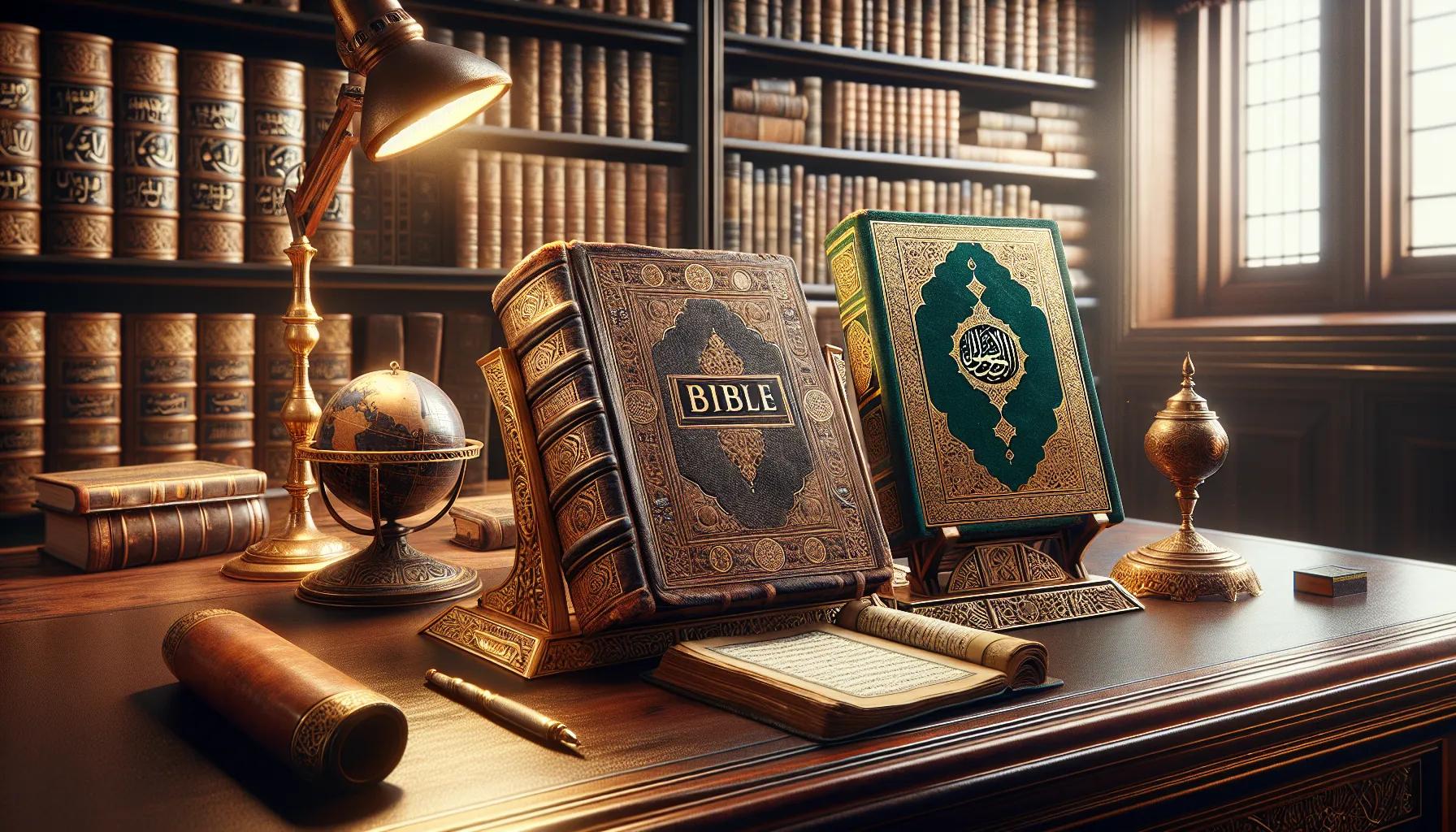
One of the most significant questions in Christian-Muslim dialogue concerns the status of the Bible. Christians affirm that Jesus Christ fulfilled the Old Testament and established the New Covenant, but He never rejected the divine authority of the Old Testament. In fact, He consistently upheld it as the Word of God. This creates an important comparison with Islam because the Qur’an also speaks positively about the previous Scriptures.
Jesus Affirmed the Old Testament
Christians cannot reject the Old Testament without contradicting Jesus Himself.
Jesus declared:
“Think not that I am come to destroy the law, or the prophets. I am not come to destroy, but to fulfill.”
— Matthew 5:17 (Douay-Rheims)
He also said:
“The scripture cannot be broken.”
— John 10:35
After His resurrection, Jesus explained that everything written about Him in “the law of Moses, and in the prophets, and in the psalms” had to be fulfilled (Luke 24:44).
For Christians, this means the Old Testament is the inspired Word of God. We stand alongside the Jewish people in affirming that these Scriptures were given by God, even though Christians believe they ultimately point to Christ.
What Did Muhammad Say About the Bible?
The Qur’an repeatedly speaks of the Torah and the Gospel as revelations given by God.
For example:
- Surah 3:3 says that God revealed the Torah and the Gospel before the Qur’an.
- Surah 5:46 says that Jesus was given the Gospel containing “guidance and light.”
- Surah 5:68 tells the People of the Book to stand upon the Torah and the Gospel.
- Surah 10:94 instructs Muhammad that if he is in doubt, he should ask those who have been reading the previous Scriptures.
These passages recognize the Torah and the Gospel as divine revelations.
The Dilemma
Here is the central dilemma.
If the Torah and Gospel available during Muhammad’s lifetime were reliable enough for Jews and Christians to follow, then they testify to doctrines such as:
- Jesus is the Son of God.
- Jesus died by crucifixion.
- Jesus rose from the dead.
- Salvation comes through Christ.
These teachings conflict with later Islamic doctrine.
However, if the Scriptures had already been corrupted before Muhammad, then why does the Qur’an repeatedly refer people back to them and speak of them as guidance and light?
This leaves two difficult possibilities:
- The Bible was trustworthy during Muhammad’s lifetime, in which case its testimony about Jesus challenges Islamic teaching.
- The Bible was already corrupted, in which case the Qur’an’s commands to consult and follow it become difficult to explain.
This is often called the “Islamic Dilemma.”
Can Muslims Say the Bible Was Corrupted?
Many Muslims argue that the original Torah and Gospel were true but were later altered.
The difficulty with this claim is historical.
There is no manuscript evidence showing an entirely different Bible existing before the seventh century that agrees with later Islamic teaching about Jesus. Thousands of biblical manuscripts from centuries before Muhammad consistently proclaim Christ’s crucifixion, resurrection, and divinity.
The Qur’an itself also states:
“There is none that can change the words of Allah.”
— Surah 6:115
If God’s words cannot be changed, then claiming His previous revelations were completely corrupted raises further questions.
Why Christians Defend the Old Testament
Christians do not dismiss the Old Testament because Jesus never dismissed it.
The New Testament constantly quotes the Old Testament and presents Christ as the fulfillment of God’s promises to Israel.
As St. Paul wrote:
“All scripture, inspired of God, is profitable to teach, to reprove, to correct, to instruct in justice.”
— 2 Timothy 3:16 (Douay-Rheims)
For this reason, Christians defend the divine inspiration of the Old Testament alongside the Jewish people, while also proclaiming that Jesus Christ fulfills everything promised in those sacred writings.
Conclusion
The Christian faith is built upon a continuous revelation. The Old Testament points to Christ, and the New Testament fulfills the Old Testament. Christians cannot reject either without rejecting Jesus Himself.
Islam also acknowledges that God gave the Torah and the Gospel. The question is whether those Scriptures remained trustworthy. If they did, their testimony about Jesus deserves to be believed. If they did not, then the Qur’an’s positive references to them become difficult to reconcile.
Ultimately, the discussion is not merely about books but about the identity of Jesus Christ. Christians believe that the Scriptures—from Genesis to Revelation—bear unified witness to Him as the promised Messiah, the incarnate Son of God, crucified, risen, and Lord of all.
Sources
- Holy Bible, Douay-Rheims: Matthew 5:17–18; John 10:35; Luke 24:44–47; 2 Timothy 3:16.
- Catechism of the Catholic Church, §§121–123, 128–130.
- Second Vatican Council, Dei Verbum, §§14–16.
- Qur’an: Surahs 3:3; 5:46–48; 5:68; 6:115; 10:94.